VCU, COM Board, Key Fob, and BMS Interface PCBA
EV Control Board PCB Assembly for Vehicle Electronics That Must Match the Harness
PCBInsider builds EV control board PCB assemblies where SMT quality, firmware access, connector fit, test evidence, and harness integration are reviewed before the quote becomes a production promise.
VCU + COM
EV board families
SMT + THT
Mixed assembly route
IATF 16949
Automotive quality context
AOI + X-Ray
Inspection by package risk
TL;DR
- EV control board PCBA covers VCU, COM board, key fob, BMS interface, and gateway assemblies.
- Best-fit projects need SMT, THT, firmware access, connector review, inspection records, and harness-interface control.
- Send Gerber, BOM, centroid, assembly drawing, firmware notes, test plan, connector data, and revision history.
- We support prototype, validation, pilot, and bridge builds before repeat production.
Control Boards Fail at the Interfaces, Not Only at the Solder Joints
EV control board PCB assembly is the manufacturing service that turns a released electric-vehicle controller design into a tested printed circuit board assembly. A printed circuit board is the substrate that carries the circuit; the assembled PCBA is the populated controller that must survive firmware loading, harness mating, vehicle bench testing, and shipment handling.
A VCU is a vehicle control unit that coordinates logic across EV subsystems, while a COM board is a communication board that can handle vehicle network or interface functions. Surface-mount technology is an assembly method that places components directly on PCB pads, and SMT only solves part of the problem. The RFQ also needs connector orientation, cable routing, programming access, and functional limits.
VCU and Vehicle Controller PCBA
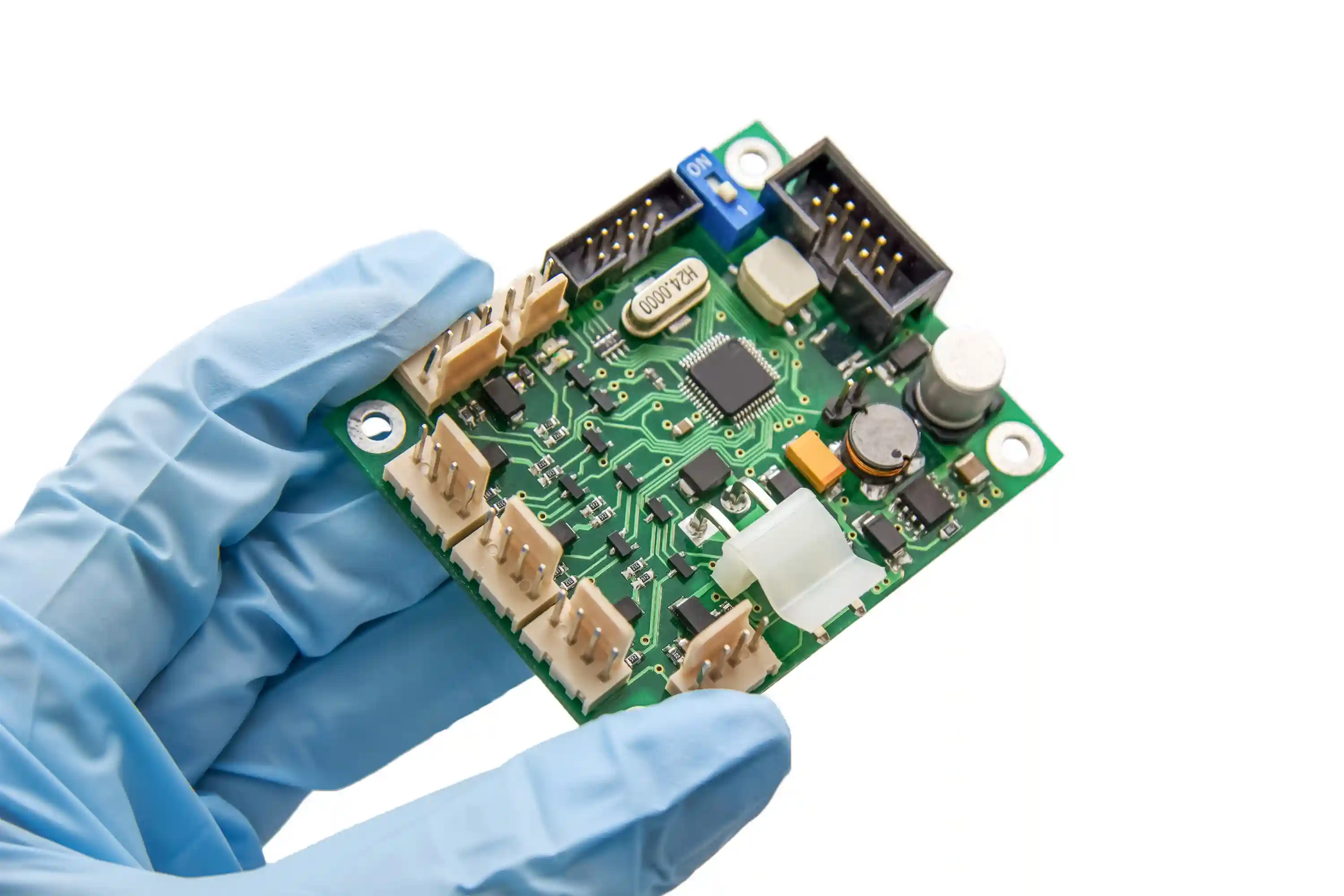
EV control board PCB assembly supports vehicle control units, gateway boards, low-voltage control modules, and communication boards where firmware access, connector fit, and lot records must be defined before production.
BMS and Power-Adjacent Interfaces
Battery management and contactor-control PCBAs are reviewed for creepage, clearance, copper weight, connector stress, conformal coating needs, and test coverage before the quote is locked.
SMT, Through-Hole, and Harness Interfaces
Mixed EV boards often combine fine-pitch ICs with terminal blocks, shielded connectors, headers, and harness exits. We plan reflow, selective soldering, inspection, and cable mating checks together.
BOM and Approved Alternate Control
Automotive PCBA sourcing is controlled around approved manufacturer part numbers, substitute approval, lifecycle risk, programmed devices, and any customer-specific sourcing restrictions.
Inspection Evidence for Hidden Risk
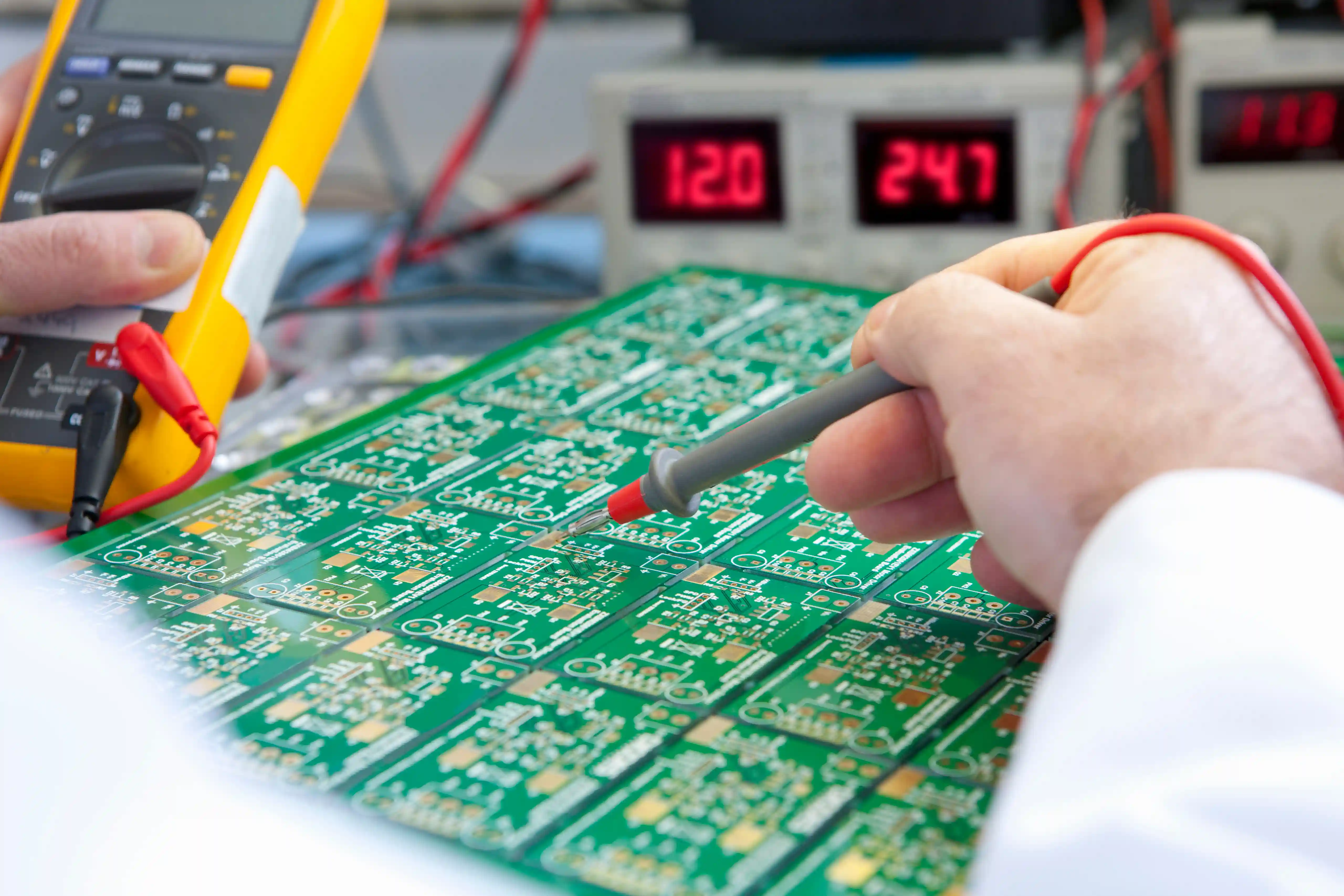
AOI, X-ray by BGA or QFN risk, microscope review, first-article checks, and electrical test planning help separate solder defects from firmware, harness, or vehicle-integration issues.
Programming and Functional Test Handoff
Firmware image, checksum, serial record, current draw, communication response, and fixture limits can be tied to the PCBA traveler when the control board must ship ready for vehicle integration.
Capability Scope and Limits
Service focus
EV control board PCB assembly for VCU, COM board, key fob, BMS interface, gateway, sensor, and low-voltage vehicle electronics
Assembly route
SMT, through-hole, mixed technology, selective soldering by review, connector soldering, and post-assembly inspection
Package support
QFN, QFP, BGA, LGA, SOIC, SOT, 01005 passives, relays, headers, terminal blocks, and automotive connectors
Board types
Rigid FR-4, HDI, heavy copper sections, aluminum PCB for thermal modules, rigid-flex by application review
Quality references
ISO 9001:2015 baseline, IATF 16949:2016 context by customer requirement, IPC-A-610 and IPC-J-STD-001 workmanship expectations
Evidence package
DFM notes, BOM review, FAI, AOI records, X-ray images by risk, electrical or functional test notes, and approved deviations
Files required
Gerber or ODB++, BOM, centroid, assembly drawing, firmware requirement, test plan, connector notes, quantities, and revision history
Best fit
Prototype, validation, pilot, and bridge builds where EV electronics must line up with harnesses, firmware, and test evidence
Out of scope
Vehicle homologation, final safety certification ownership, undefined firmware validation, and unapproved component substitutions
IATF 16949 is an automotive quality-management standard, and PPAP is a production approval process used by many automotive buyers. Public background on IATF 16949 and PPAP helps explain why an EV board quote must define records, approved changes, and release evidence before pilot production.
Hommer Zhao on EV Control Boards
"For an EV controller, I want the harness drawing and the programming requirement beside the Gerber files. The board, firmware, and connector system are one release risk even when purchasing splits them into separate line items."
Process Built Around Vehicle Release Risk
IPC is an electronics industry association associated with widely used electronics workmanship standards, including IPC-A-610 for assembly acceptability. The public overview of IPC in electronics is useful context, but the EV control board traveler still needs buyer-specific limits for firmware, communication, connector mating, and test results.
Step 1
Map vehicle function and board risk
We review whether the PCBA controls propulsion logic, body electronics, charging, communication, key access, or battery sensing, then map the matching quality and test risks.
Step 2
Run DFM, DFA, and BOM sourcing review
Engineering checks footprints, polarity, solder access, creepage, connector fit, and test pads while sourcing reviews alternates, programmed devices, long-lead parts, and AVL constraints.
Step 3
Build first articles with release evidence
The first production-representative boards are assembled through SMT, THT, inspection, and electrical checks so the buyer can approve revision, workmanship, and test assumptions.
Step 4
Add programming and functional test gates
When required, firmware loading, checksum capture, serial record, current draw, CAN or LIN response, and fixture results are connected to the PCBA lot record.
Step 5
Coordinate harness and vehicle integration notes
Connector mating, cable exit direction, strain relief, enclosure fit, and packaging are reviewed before shipment so the assembled board can move cleanly into the EV subsystem.
Which Buying Path Fits Your EV Electronics Program?
The right supplier scope depends on where the risk sits: bare PCB fabrication, assembled control-board electronics, vehicle wiring, or full subsystem integration. Choosing too narrow a path can save quote time but add integration cost later.
Automotive PCB manufacturing
Bare board fabrication plus automotive evidence
Use when laminate, stackup, copper, impedance, and PCB fabrication records are the main RFQ risk.
EV control board PCBA
Assembled controller electronics with firmware, connector, and test handoff
Use when SMT, THT, BOM sourcing, programming, and harness interface risk must be controlled together.
EV wire harness manufacturing
Vehicle interconnects, high-voltage or low-voltage harnesses, and connectorized cable routing
Use when the electrical path is cable-led and board assembly is outside the immediate scope.
EMS or box build
PCBA plus harnesses, enclosure, labels, packing, and final product test
Use when the buyer wants one release package for the finished electronic subsystem.
The practical trade-off is control versus speed. A narrow PCB quote can move quickly, but an EV control-board quote that includes harness mating, programming, and functional test reduces late surprises when the VCU, BMS interface, or COM board reaches vehicle integration.
What To Send For a Quote That Engineers Can Use
A useful EV control board PCBA quote needs the data that defines assembly, software, and integration risk. Send Gerber or ODB++, BOM with manufacturer part numbers, centroid data, assembly drawings, PCB stackup, firmware requirements, test plan, connector mating notes, target quantity, and desired lead time.
A second example came from an Australian automotive-electronics program built around cross-category expansion and engagement across multiple departments. That is the reason we ask for harness, firmware, and board details early, especially when the buyer is trying to consolidate EV electronics sourcing.
EV Control Board PCB Assembly FAQ
Answers for EV procurement and engineering teams preparing a VCU, COM board, key fob, BMS interface, or gateway PCBA RFQ.
What is EV control board PCB assembly?
EV control board PCB assembly is the SMT, through-hole, inspection, programming, and test release process for vehicle controller boards such as VCU, COM board, key fob, BMS interface, and gateway PCBAs. The quote should include Gerber or ODB++, BOM, centroid data, assembly drawings, firmware notes, connector requirements, target quantity, and test expectations. For automotive programs, we also review IPC-A-610 workmanship expectations and any IATF 16949:2016 or PPAP evidence requested by the customer.
I need a VCU board and harnesses for an EV prototype. Should I quote them together?
Quote the VCU board and harnesses together when connector fit, firmware access, enclosure routing, or vehicle-level test will affect release. A board can pass AOI and still fail integration if the mating connector, pinout, cable exit, or programming pad access is wrong. It often helps to quote several related PCB/PCBA types together (for example a key fob, VCU board, and COM board) so the board and harness scope is visible before supplier award.
How is EV control board PCBA different from general automotive PCB manufacturing?
General automotive PCB manufacturing focuses on the fabricated circuit board, including laminate, stackup, copper, impedance, surface finish, and fabrication evidence. EV control board PCBA adds component sourcing, SMT placement, through-hole soldering, AOI, X-ray by package risk, firmware loading, functional test, and harness-interface review. Use the EV control board service when the buyer needs an assembled electronic module, not only a bare automotive PCB.
What standards should I mention in an EV control board assembly RFQ?
Mention IPC-A-610 for assembly acceptability, IPC-J-STD-001 for soldered electrical and electronic assemblies, ISO 9001:2015 for document-control expectations, and IATF 16949:2016 if the customer requires automotive quality-system evidence. If PPAP is required, state the submission level and evidence list before pilot production. Standards do not replace the product test plan, so include limits for current draw, communication response, firmware version, and any CAN, LIN, or sensor checks.
Can you handle firmware programming on EV PCB assemblies?
Yes, firmware programming can be included when the buyer supplies the released image, version ID, checksum requirement, programming interface, board revision, and acceptance procedure. Typical access paths include SWD, JTAG, UART bootloader, USB, or pogo-pin pads, depending on the design. For a pilot lot, we recommend tying firmware version, serial number, and pass/fail result to the traveler because the wrong firmware can make a visually perfect PCBA unusable in vehicle testing.
What quantity is practical for an EV control board pilot build?
A practical pilot build can be as small as a few dozen boards when the goal is firmware bring-up, harness fit, and vehicle bench testing, while 100 to 500 units is more useful for production-intent validation. The right quantity depends on component availability, fixture readiness, PPAP or customer evidence needs, and how many vehicle or subsystem tests must run in parallel. We support prototype, validation, pilot, and bridge quantities before repeat production.
What should I send to avoid delays in EV PCBA pricing?
Send Gerber or ODB++, BOM with manufacturer part numbers, centroid data, assembly drawings, PCB stackup, firmware notes, test plan, connector mating details, annual demand, and the requested lead time. If the board belongs to a VCU, BMS, key fob, or COM module, identify that function because sourcing, test coverage, and traceability expectations differ by risk. Also mark any approved alternates; unapproved substitutions are out of scope for automotive release builds.
Related Services
Automotive PCB Manufacturing
Use this page when the main RFQ risk is automotive bare-board fabrication, stackup, and IATF-style release evidence.
PCBA Programming and Functional Testing
Use this service when firmware loading, checksum control, and powered acceptance testing define shipment release.
EV Wire Harness Manufacturer
Use this page when the control board must be sourced with battery, charging, or low-voltage vehicle harnesses.
Electronics Manufacturing Services
Use EMS support when EV control electronics continue into harnesses, box build, final test, and packing.
Buyer Guides
EV VCU Board PCB Assembly Guide
A buyer control guide for VCU sourcing, firmware access, harness interfaces, test fixtures, and release gates.
PCBA Programming and Functional Test Release Gate
How to control firmware, serialization, fixture readiness, and shipment evidence before pilot or production.
PCB Assembly Supplier Consolidation
How to consolidate PCBA, harnesses, component sourcing, and box-build work without losing engineering control.
Need an EV Control Board Quote With Firmware and Harness Risk Reviewed?
Send the board files, BOM, firmware notes, connector requirements, test plan, target quantity, and vehicle subsystem context. PCB Insider will review assembly route, sourcing risk, programming access, and release evidence before pricing.