RoHS Compliance Guide for PCBs: Restricted Substances, Requirements & Certification
Complete guide to RoHS compliance in PCB manufacturing. Learn about restricted substances, concentration limits, documentation requirements, and lead-free assembly processes.
RoHS compliance has fundamentally transformed electronics manufacturing, eliminating hazardous substances from products sold worldwide. For PCB manufacturers and electronics companies, understanding these regulations ensures market access while protecting workers and the environment. This comprehensive guide covers RoHS requirements, restricted substances, compliance strategies, and documentation practices for PCB manufacturing.
What is RoHS Compliance?
RoHS stands for Restriction of Hazardous Substances, a European Union directive limiting dangerous materials in electrical and electronic equipment. Originally adopted as Directive 2002/95/EC in 2003, the regulation addressed health and environmental concerns around heavy metals and flame retardants commonly used in electronics manufacturing. The directive mandates that covered products cannot contain restricted substances above specified concentration thresholds.
The regulation applies globally to any electronics destined for EU markets, regardless of manufacturing location. Asian manufacturers producing boards for European customers must comply equally with domestic EU producers. This extraterritorial reach has effectively established RoHS as a worldwide standard, with similar regulations adopted in China, South Korea, Japan, and California extending coverage beyond EU borders.
RoHS compliance requires systematic management across entire supply chains. Raw material suppliers, component manufacturers, PCB fabricators, and assembly houses each bear responsibility for ensuring materials meet requirements. Documentation flows through the chain, providing traceability from raw materials through finished products. This comprehensive approach prevents non-compliant substances from entering products at any manufacturing stage.
The regulation continues evolving as scientific understanding advances and substitute materials mature. Recent updates added phthalate plasticizers to the restricted list while tightening exemptions for legacy applications. Manufacturers must stay current with regulatory changes affecting their products and processes.
Evolution of RoHS Directives
The original RoHS directive (RoHS 1) took effect in July 2006, requiring compliance for electrical and electronic equipment placed on the EU market. This initial regulation restricted six hazardous substances: lead, mercury, cadmium, hexavalent chromium, polybrominated biphenyls, and polybrominated diphenyl ethers. The regulation established maximum concentration limits and identified product categories within scope.
RoHS 2 (Directive 2011/65/EU) expanded and updated the original regulation, entering force in January 2013. This recast broadened product coverage while maintaining the original restricted substances. RoHS 2 introduced the CE marking requirement, mandating that compliant products bear this conformity marking before EU market placement. The directive also established a systematic framework for periodic substance reviews and scope adjustments.
RoHS 3 (Directive 2015/863) added four phthalate plasticizers to the restricted substance list, bringing the total to ten regulated materials. These additions—DEHP, BBP, DBP, and DIBP—targeted plasticizers commonly found in cables, connectors, and plastic housings. The phthalate restrictions became mandatory in July 2019, requiring manufacturers to eliminate these substances from applicable products.
Future regulatory evolution continues under consideration. Additional substance restrictions being evaluated include certain brominated flame retardants, chlorinated flame retardants, and PVC. Manufacturers should monitor regulatory developments and prepare for potential additions to restricted substance lists.
RoHS Restricted Substances
Heavy Metals
Lead (Pb) historically served as the primary solder material in electronics, providing excellent wetting, low melting temperature, and reliable joints. RoHS compliance requires lead-free solder alternatives, typically tin-silver-copper alloys. The 1000 ppm (0.1%) concentration limit applies to homogeneous materials, meaning each individual material must comply rather than averaging across assemblies.
Mercury (Hg) appeared in some switches, relays, and certain lamp types. The 1000 ppm limit effectively eliminates mercury from most electronic applications, though specific exemptions exist for certain lighting technologies where alternatives remain technically impractical.
Cadmium (Cd) found use in plating applications and some battery technologies. The stricter 100 ppm (0.01%) limit reflects cadmium's particular toxicity and bioaccumulation concerns. This tighter threshold requires more stringent contamination control than other restricted substances.
Hexavalent Chromium (Cr6+) provided corrosion protection in metal finishing applications. The 1000 ppm limit requires alternative conversion coatings and passivation processes for metal surfaces, typically trivalent chromium or chromium-free alternatives.
Flame Retardants
Polybrominated Biphenyls (PBB) and Polybrominated Diphenyl Ethers (PBDE) served as flame retardants in plastic housings and laminate materials. These persistent organic pollutants accumulate in biological systems and resist environmental degradation. Alternative flame retardant chemistries—phosphorus-based, mineral, or reactive types—provide compliant fire resistance.
Phthalate Plasticizers
The four restricted phthalates—DEHP, BBP, DBP, and DIBP—function as plasticizers softening PVC and other polymers. These substances appear in cable jackets, wire insulation, connector housings, and potting compounds. Non-phthalate plasticizers or alternative polymer systems provide compliant flexibility.
Concentration Limits and Measurement
| Substance | Concentration Limit | Common Applications | |-----------|--------------------|-----------------------| | Lead (Pb) | 1000 ppm (0.1%) | Solder, component finishes | | Mercury (Hg) | 1000 ppm (0.1%) | Switches, lamps | | Cadmium (Cd) | 100 ppm (0.01%) | Plating, batteries | | Hexavalent Chromium | 1000 ppm (0.1%) | Metal finishes | | PBB | 1000 ppm (0.1%) | Flame retardants | | PBDE | 1000 ppm (0.1%) | Flame retardants | | DEHP | 1000 ppm (0.1%) | Plasticizers | | BBP | 1000 ppm (0.1%) | Plasticizers | | DBP | 1000 ppm (0.1%) | Plasticizers | | DIBP | 1000 ppm (0.1%) | Plasticizers |
Concentration limits apply to homogeneous materials—individual substances that cannot be mechanically separated into different materials. A solder joint is homogeneous; a cable containing copper conductors, insulation, and jacket comprises multiple homogeneous materials, each evaluated separately. This approach prevents manufacturers from diluting non-compliant materials by averaging with compliant portions.
Analytical testing validates compliance through techniques including X-ray fluorescence (XRF) screening and gas chromatography-mass spectrometry (GC-MS) for definitive quantification. XRF provides rapid screening identifying samples requiring further investigation, while GC-MS delivers precise concentration measurements for documentation.
PCB Manufacturing Requirements
Substrate Materials
Base laminate materials like FR-4 must use compliant flame retardant systems. Traditional brominated compounds—PBB and PBDE—require replacement with alternative chemistries. Phosphorus-based flame retardants, mineral fillers, and reactive systems provide RoHS-compliant fire resistance. Halogen-free laminates go beyond RoHS requirements, eliminating all halogenated flame retardants regardless of specific chemistry.
Prepreg bonding materials similarly require compliant formulations. These adhesive layers bond copper foils and laminate cores during PCB fabrication, with their flame retardant content subject to the same restrictions as base laminates.
Surface Finishes
Traditional tin-lead HASL (Hot Air Solder Leveling) finishes require replacement with lead-free alternatives. Compliant options include:
- - Lead-free HASL using tin-copper or tin-silver-copper alloys
- ENIG (Electroless Nickel Immersion Gold) providing flat surfaces for fine-pitch components
- OSP (Organic Solderability Preservative) offering cost-effective protection
- Immersion Silver delivering excellent solderability with flat profile
- Immersion Tin providing good wetting characteristics
Hexavalent chromium conversion coatings on metal surfaces require trivalent chromium or chromium-free alternatives providing equivalent corrosion protection.
Solder Materials
Lead-free solder alloys replace traditional tin-lead compositions. Common alternatives include:
- - SAC305 (Sn96.5Ag3.0Cu0.5) offering good reliability for general applications
- SAC387 (Sn95.5Ag3.8Cu0.7) providing enhanced thermal fatigue resistance
- SN100C (Sn-Cu-Ni-Ge) offering cost-effective performance
These alloys require higher processing temperatures (approximately 240-260°C peak) compared to tin-lead (210-225°C). PCB materials, components, and assembly processes must accommodate elevated thermal profiles.
Solder flux formulations also require compliance verification, ensuring no restricted substances appear in cleaning agents or activators.
Component Requirements
All components assembled onto RoHS-compliant boards must themselves be compliant. Component manufacturers provide documentation certifying their products meet substance restrictions. Key considerations include:
Termination Finishes: Component leads and pads must use lead-free plating—typically matte tin, tin-silver, or nickel-palladium-gold. Legacy components with tin-lead finishes cannot be used in compliant assemblies.
Internal Construction: Some components contain restricted substances internally. Ceramic capacitors may contain lead in their dielectric; certain semiconductors use lead in die attach materials. Exemptions cover specific applications where technically unavoidable, but manufacturers should select compliant alternatives when available.
Component Markings: RoHS-compliant components often bear markings indicating lead-free status. Common designations include "Pb-free," "LF" (Lead-Free), or "e3" symbols. However, absence of marking doesn't necessarily indicate non-compliance—documentation provides definitive verification.
Documentation and Traceability
Material Declarations
Suppliers provide material declarations specifying restricted substance content in their products. The IPC-1752A standard establishes a common format for these declarations, facilitating information exchange across supply chains. Declarations should accompany every material lot, enabling traceability through production.
Certificates of Conformity
Certificates of Conformity (CoC) declare that specific products comply with RoHS requirements. These certificates reference applicable directive versions, list restricted substances covered, and confirm compliance based on testing or supplier declarations. CoC documents support regulatory inquiries and customer audits.
Test Reports
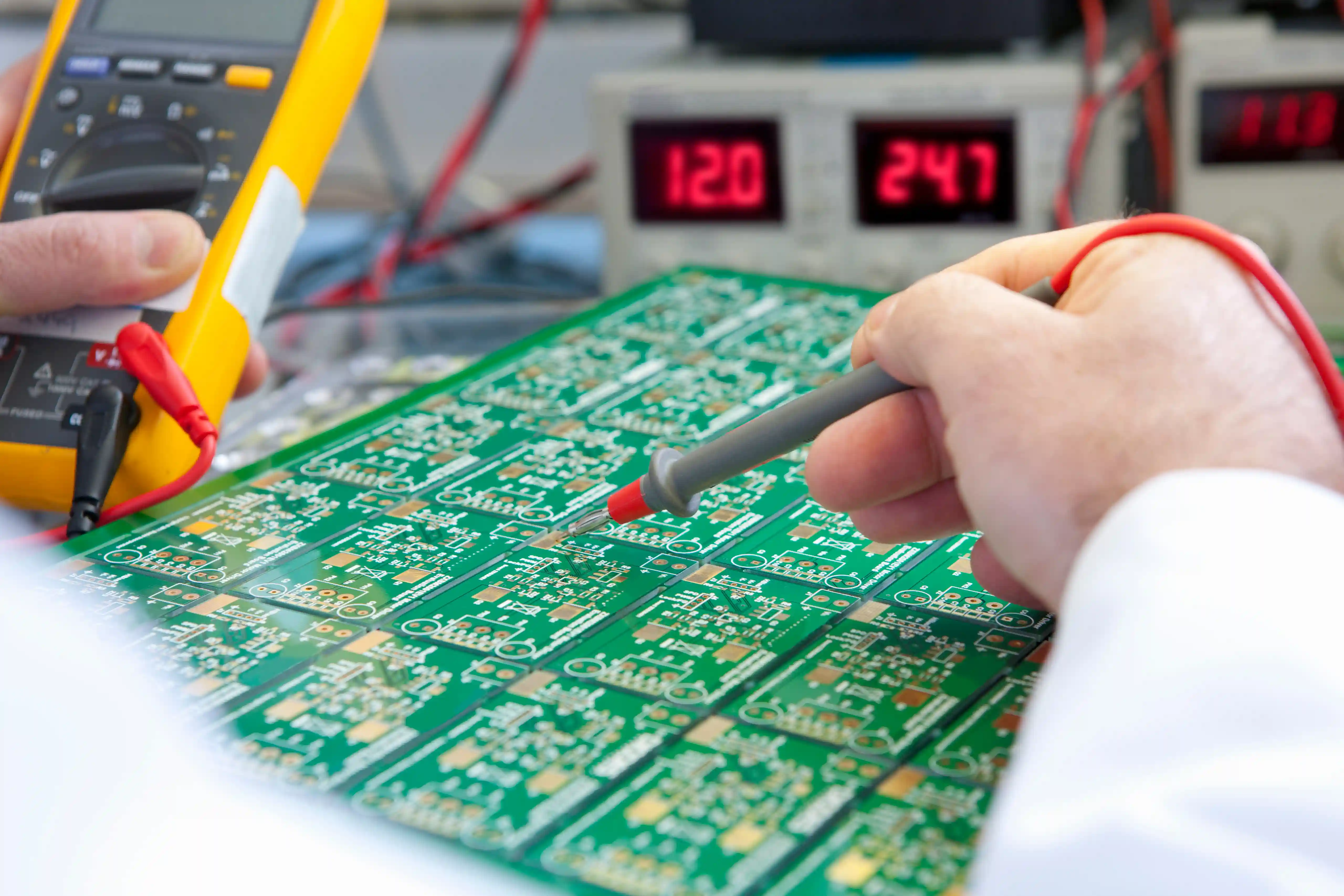
Independent laboratory testing validates compliance through analytical measurements. Test reports document sample identification, test methods employed, measurement results, and compliance determination. Periodic testing programs verify ongoing conformance as materials and processes change.
CE Marking
RoHS 2 incorporated CE marking requirements for compliant products. The CE mark indicates conformity with applicable EU directives, including RoHS. Manufacturers self-declare compliance by affixing CE marking, maintaining technical documentation supporting the declaration, and assuming responsibility for conformity.
Chain of Custody
Complete supply chain documentation demonstrates compliance at every stage. Incoming materials carry supplier declarations and test reports. Production records track material lots through fabrication and assembly. Finished goods documentation aggregates component and material compliance into product-level certification. This traceability chain enables investigation if compliance questions arise.
RoHS Certification Standards
IPC-1752A
The IPC-1752A standard provides a framework for materials declaration across the electronics supply chain. The standard defines multiple declaration classes addressing different product levels:
- - Class A: Supplier self-declaration
- Class B: Third-party tested materials
- Class C: Components and subassemblies
- Class D: Finished products with extensive testing
Higher classes provide greater assurance through more rigorous testing and documentation requirements. Manufacturers select appropriate classes based on customer requirements and risk tolerance.
UL Certification
Underwriters Laboratories (UL) offers RoHS verification programs certifying materials and products meet substance restrictions. UL testing follows established methodologies, with certificates providing recognized proof of compliance. UL-certified materials simplify supply chain management by providing third-party verification.
Exemptions and Special Cases
RoHS includes exemptions for specific applications where technically unavoidable or where compliant alternatives don't exist. Current exemptions relevant to PCB manufacturing include:
- - Lead in high melting temperature solders (>85% lead content)
- Lead in servers, storage, and network equipment solders
- Lead in glass and ceramic components
- Lead in certain optical and filter glass
- Mercury in specific lamp types
- Hexavalent chromium in absorption refrigerators
Exemptions undergo periodic review, with phase-out dates established when alternatives become available. Manufacturers relying on exemptions should monitor regulatory developments and prepare transition plans.
Cost Considerations
Transitioning to RoHS compliance involved significant industry investment when regulations first took effect. Lead-free solders cost more than tin-lead alternatives. Halogen-free laminates carried price premiums. Higher processing temperatures required equipment upgrades and process optimization. Component costs increased from lead-free terminations and compliance testing.
However, these cost impacts diminished as compliant materials and processes matured. Economies of scale reduced material premiums. Process optimization recovered productivity. Today, RoHS compliance is well-integrated into standard manufacturing, with minimal cost impact for routine production. The industry has largely absorbed compliance requirements into normal operations.
For manufacturers still transitioning or facing unusual requirements, careful supplier management and process controls enable cost-effective compliance. Volume purchasing, qualified supplier programs, and efficient documentation systems minimize overhead while maintaining conformance.
Global Regulatory Landscape
While RoHS originated in the EU, similar regulations exist worldwide:
China RoHS (Management Methods for Restriction of Hazardous Substances in Electrical and Electronic Products) covers products manufactured and sold in China with marking requirements and substance restrictions aligned with EU RoHS.
UK RoHS maintains alignment with EU requirements following Brexit, with similar scopes, restricted substances, and exemptions.
California RoHS restricts certain hazardous substances in electronic devices sold in California, generally following EU substance lists.
Korea RoHS and Japan's J-MOSS establish similar requirements in Asian markets.
This regulatory convergence means compliance with EU RoHS typically satisfies requirements in most major markets. However, manufacturers should verify specific requirements for each target market.
Summary
RoHS compliance eliminates hazardous substances from electronics, protecting workers, consumers, and the environment. Understanding restricted substances, concentration limits, and documentation requirements enables effective compliance management. Lead-free soldering, compliant surface finishes, and halogen-free materials form the foundation of RoHS-compliant PCB manufacturing. Proper documentation and supply chain traceability demonstrate conformance to regulatory authorities and customers.
For RoHS-compliant PCB manufacturing and assembly services, contact WellPCB for expert guidance and documented production controls.
Frequently Asked Questions
What substances are restricted under RoHS?
RoHS restricts ten substances: lead, mercury, cadmium, hexavalent chromium, PBB, PBDE, and four phthalates (DEHP, BBP, DBP, DIBP). Concentration limits are 0.1% (1000 ppm) for most substances, with cadmium restricted to 0.01% (100 ppm).
Does RoHS apply to PCB manufacturers outside Europe?
Yes, RoHS applies to any electronics placed on the EU market regardless of manufacturing location. PCB manufacturers worldwide must comply if their products will reach EU markets, either directly or as components in finished goods.
What is the difference between RoHS 2 and RoHS 3?
RoHS 2 (2011/65/EU) expanded the original directive's scope and added CE marking requirements. RoHS 3 (2015/863) added four phthalate plasticizers to the restricted substance list, effective July 2019.
Can lead solder still be used in any applications?
Limited exemptions allow lead solder in specific applications, including high-temperature solders with >85% lead content and certain server/storage equipment. These exemptions undergo periodic review and may be phased out as alternatives mature.
How do I prove my PCBs are RoHS compliant?
Compliance demonstration requires material declarations from suppliers, certificates of conformity, test reports validating substance concentrations, and CE marking on finished products. Maintaining complete documentation enables verification during audits or regulatory inquiries.
Related Articles
Continue exploring similar topics
AOI Testing Guide: PCB Automated Optical Inspection Explained
Complete guide to Automated Optical Inspection (AOI) for PCB manufacturing. Learn how AOI works, defect detection capabilities, 2D vs 3D systems, and implementation best practices.
Bed of Nails Test Fixture Guide: PCB In-Circuit Testing Explained
Complete guide to bed of nails test fixtures for PCB testing. Learn about fixture types, pogo pins, ICT procedures, and quality control applications.

Double-Sided PCB: Complete Design and Manufacturing Guide
Master double-sided PCB design with our comprehensive guide covering manufacturing processes, layout strategies, via specifications, and cost optimization tips.
Ready to bring your PCB design to life?
Get an engineer-reviewed quote for your custom PCB fabrication and assembly needs.
Request a Quote