What are Microelectronics? Overview
What are microelectronics? Think of all the miniature electronic components today, such as cell phones.
What are microelectronics? Think of all the miniature electronic components today, such as cell phones. Can we regard their make-up parts as microelectronic components?
What exactly qualifies to be regarded as a microelectronic device? The field of electronics is vast, and it keeps evolving.
One apparent thing is that manufacturers are creating more efficient devices that are increasingly getting smaller.
Central to these new components are microelectronics. So what are they? Let’s expound.
What Is Microelectronics?
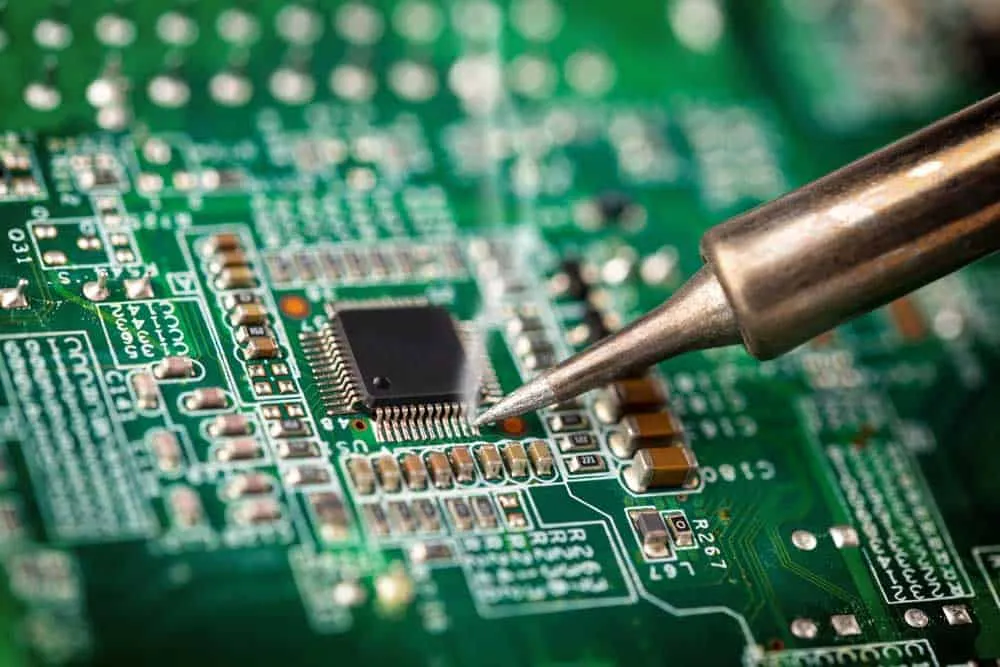
Microelectronics represents a subclass of electronics that fundamentally defines the design and creation of minute electronic components and parts.
Although ‘micro’ suggests they are small parts in the micrometer scale, this is not necessarily true.
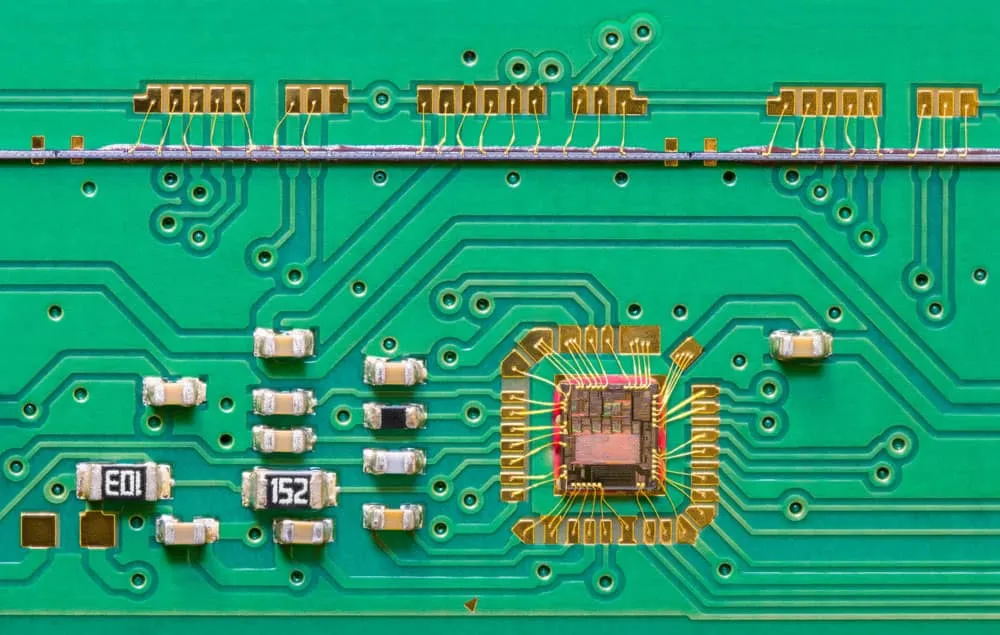
Instead, microelectronics design parts such as transistors, capacitors, and other components we use on circuit boards.
Microelectronics design is an age-old practice, although it has gained more footing recently due to rising demand for small devices.
The Discrete Components Of Microelectronics
Semiconductor materials are among the vital microelectronic components.
Therefore, microelectronics feature graphite, germanium, and silicon chips as the primary raw materials, although other parts are made from different primal matter.
The popularity of semiconductors in design for microelectronics is because they deliver more control options for the device.
For instance, unlike conductors, these materials allow electric current passage only under special conditions.
There are numerous types of microelectronics, including billions of transistors and integrated circuits in different devices.
Other parts of microelectronic circuits include microprocessors, capacitors, and resistors.
Benefits of Microelectronics

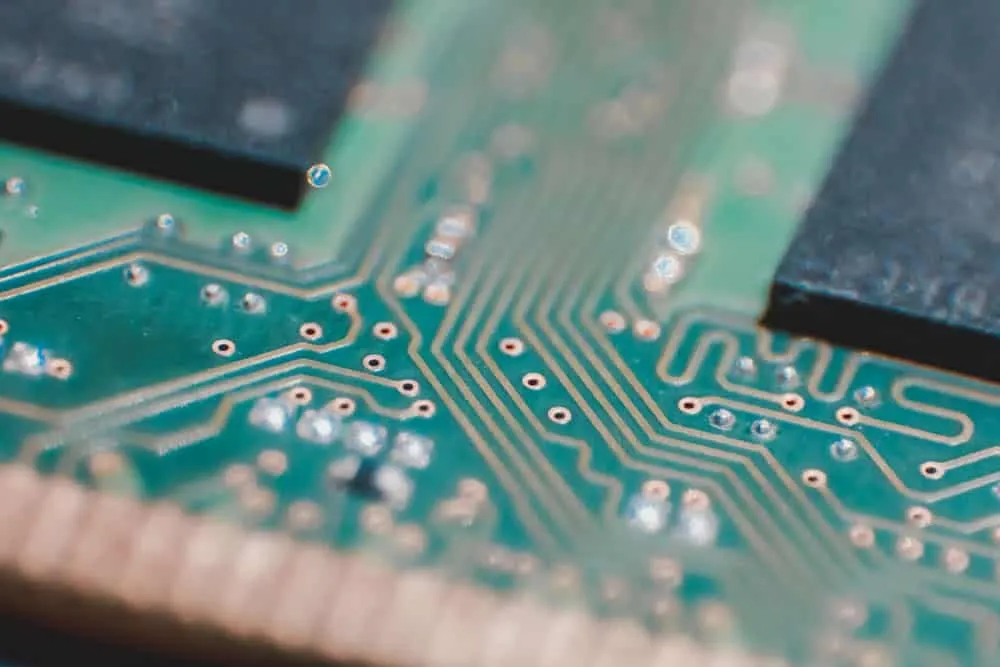
Why is the subfield of microelectronics so crucial in today’s circuit board design and assembly?
- - Mobile devices are increasingly becoming cardinal to our daily lives, making the aspect of microelectronics very crucial to modern-day civilization. As we try to improve more on the erstwhile stationary digital communication devices mobile, we need microelectronics.
- Also, we want our electronic devices to be more frugal on power consumption than before as we try to contain the ever-increasing global energy demands. These improvement attempts have received a significant boost from microelectronics as manufacturers in the subfield are creating more energy-efficient parts such as solar cells and LEDs.
- Lastly, we need more processing power on our mobile devices, and we can achieve this only primarily via modifications of microelectronics parts in these electronics.
Microelectronics Circuits
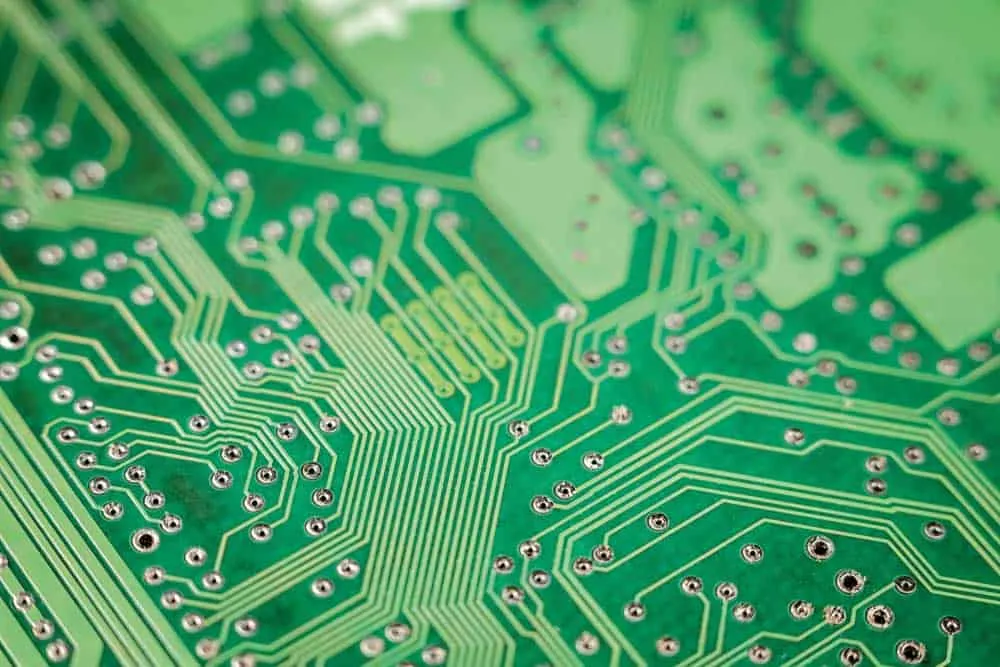
The minimalistic aspect of microelectronic electronic systems is reflected in how manufacturers can fit extensive parts in a tiny device.
This is important in modern-day circuitry and has numerous benefits we’d otherwise achieve within conventional devices.
- For instance, the processing power of these electronic systems is significantly improved primarily because current and signals move within very short distances.
- Also, today, we can use a single chip as a fundamental building block of a very sophisticated device. This aspect is cardinal in the design of high-performance pocket-size devices.
Nonetheless, we can only achieve excellent designs in microelectronic circuits with the input of modern-day positioning systems.
This is because it’s quite a hassle to precisely fit hundreds of parts into a tiny circuit board.
Hence, this field of electronics is quite complex and requires more research and input to streamline and optimize output.
How small are microelectronic devices?
While the name ‘micro’ suggests that a building block of microelectronics is tiny, this is not necessarily the case, as we highlighted earlier.
However, some of their makeup parts are significantly small to the point that you can barely recognize them unless under a microscope.
All in all, microelectronic everyday devices are significantly small yet more responsive than the former electronics.
Central to this small form factor property is an all-in-one chip which can be significantly small.
Some are so small that you can barely obtain their dimensions on the micrometer scale.
Hence, what we call a microelectronic component is not always extraordinarily tiny but simply offers more than erstwhile devices.
Semiconductors vs. Microelectronics vs. Microchips
Check out the flow diagram below that illustrates the relationship between these three main components.
From the diagram above, it’s apparent that a semiconductor is the primary building block of microchips which in turn build microelectronics.
Main Microelectronics Assembly Challenges
The increasing demand for lesser sizes of electronic devices and parts but better efficiency is proving to be a challenge for electronics manufacturers.
However, companies are catching up with industry demands, meaning that in the future, microelectronics will be the norm rather than the exception.
Wireless technology and smart devices are the everyday life standards as a testimony to this, so expect more solutions to this challenge.
What’s next for microelectronic?  *An electronic chip. *
The future of microelectronics is anchored on Moore’s law? It is a scientific concept that explains how electronic components are more likely to evolve increasingly in the new future to a point whereby the change will be no more.
This implies that the range of applications for microelectronics will be more than we have presently because of the demand in the market.
We will likely keep developing more sophisticated and personalized components as time passes.
The chip, the microelectronics flagship feature, will be central to this future. Therefore, the future of microelectronics is better and anchored on increasing demand for minute devices to the point that living without these parts will be inevitable.
Summary
Microelectronic is here to stay as we will increasingly find more use for the chip and semiconductors than today.
These parts have been the key to the significant technological advances we’ve witnessed today, such as the development of new technologies, such as diodes as light sources in LEDs.
Therefore, our rally call to everyone is that they should brace up for a future of more and better microelectronics than we have today. Explore our PCB assembly services for microelectronics projects.
Related Articles
Continue exploring similar topics
PCB Assembly Machine
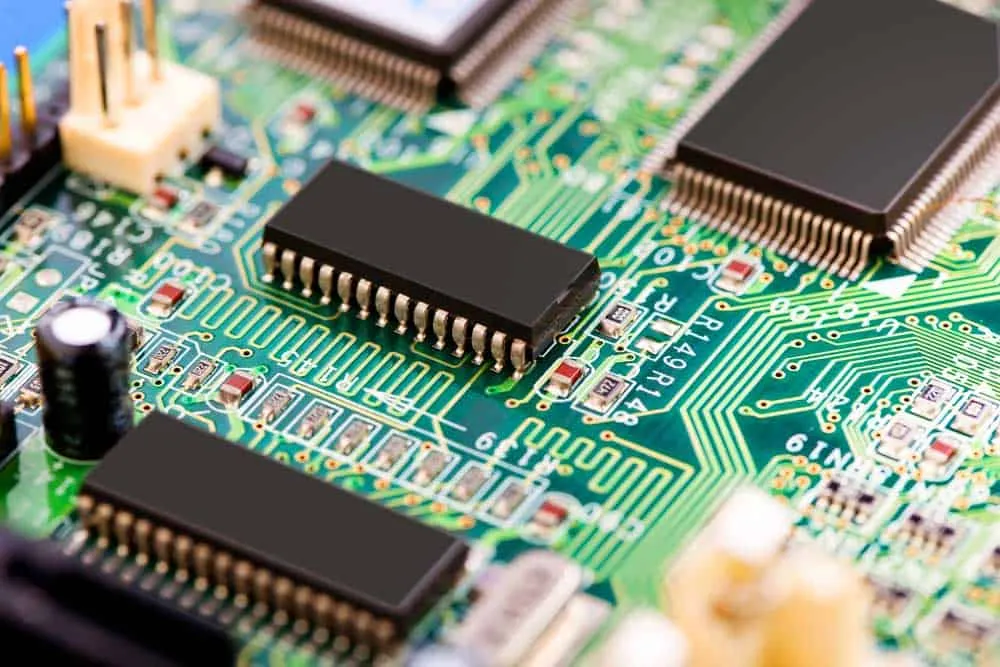
So assemblers need high-tech PCB assembly machine to mount and weld components on the board to make the circuit function as required.
What Is First Article Inspection?
What is a first article inspection?
What is CNC Technology? Industrial Guide
Discover what CNC technology is and how computer numerical control revolutionizes manufacturing. Learn about CNC machining applications in electronics assembly and PCB production.
Ready to bring your PCB design to life?
Get an engineer-reviewed quote for your custom PCB fabrication and assembly needs.
Request a Quote