Signal-Integrity Aware Connector Integration for Modular Systems
High Speed Backplane Connectors
High speed backplane connectors do not succeed on connector datasheets alone. They succeed when PCB fabrication limits, insertion method, signal transitions, mating hardware, and system-level assembly all work together. This service is for buyers who need that integration handled as a manufacturing problem, not only as a sourcing line item.
56G-224G
Channel-Aware Review
Press-Fit Ready
Connector Loading Support
PCB + Mechanics
Cross-Functional DFM
Prototype to Volume
Program Fit

What buyers should expect from a real backplane connector program
If the connector decision is separated from the board, the daughtercard, and the chassis, problems simply reappear later as insertion failures, SI drift, or integration rework.
Commercial support for high speed backplane connectors
We support programs that use high speed backplane connectors in modular telecom, compute, industrial, and instrumentation platforms where connector.
PCB footprint and stackup alignment
A connector is only as stable as the board it lands on.
Signal-integrity aware transition planning
Fast channels do not fail because of the connector alone. They fail at the transition between launch, via field, connector, and routing.
Press-fit and soldered connector process control
Different backplane interfaces need different insertion force control, coplanarity checks, thermal strategy, and fixture planning.
System build context, not isolated connector loading
Backplane connectors usually sit inside a larger electromechanical product.
Inspection, traceability, and release discipline
Production success depends on controlled part numbers, revision discipline, insertion verification, and inspection criteria that match the released build.
Service scope at a glance
Service focus
High speed backplane connector integration, loading, and manufacturing support for modular electronics systems
Typical connector styles
Orthogonal, hard-metric, press-fit, power-blade, and mixed signal plus power backplane interfaces
Board interaction
Controlled impedance routing, plated through holes, board thickness control, and connector-field tolerance management
Data required
Connector part numbers, PCB fab data, stackup target, assembly drawing, placement notes, mechanical envelope, and expected volume
Common build stages
Prototype insertion, first-article validation, production fixture planning, and handoff to box build or system integration
Companion services
Backplane PCB fabrication, PCB assembly, X-ray or ICT planning where relevant, and electromechanical assembly
Typical markets
Telecom infrastructure, data networking, industrial control, instrumentation, storage, and modular compute platforms
Commercial priority
Reliable mating, manageable insertion risk, stable signal performance, and lower rework cost during final integration
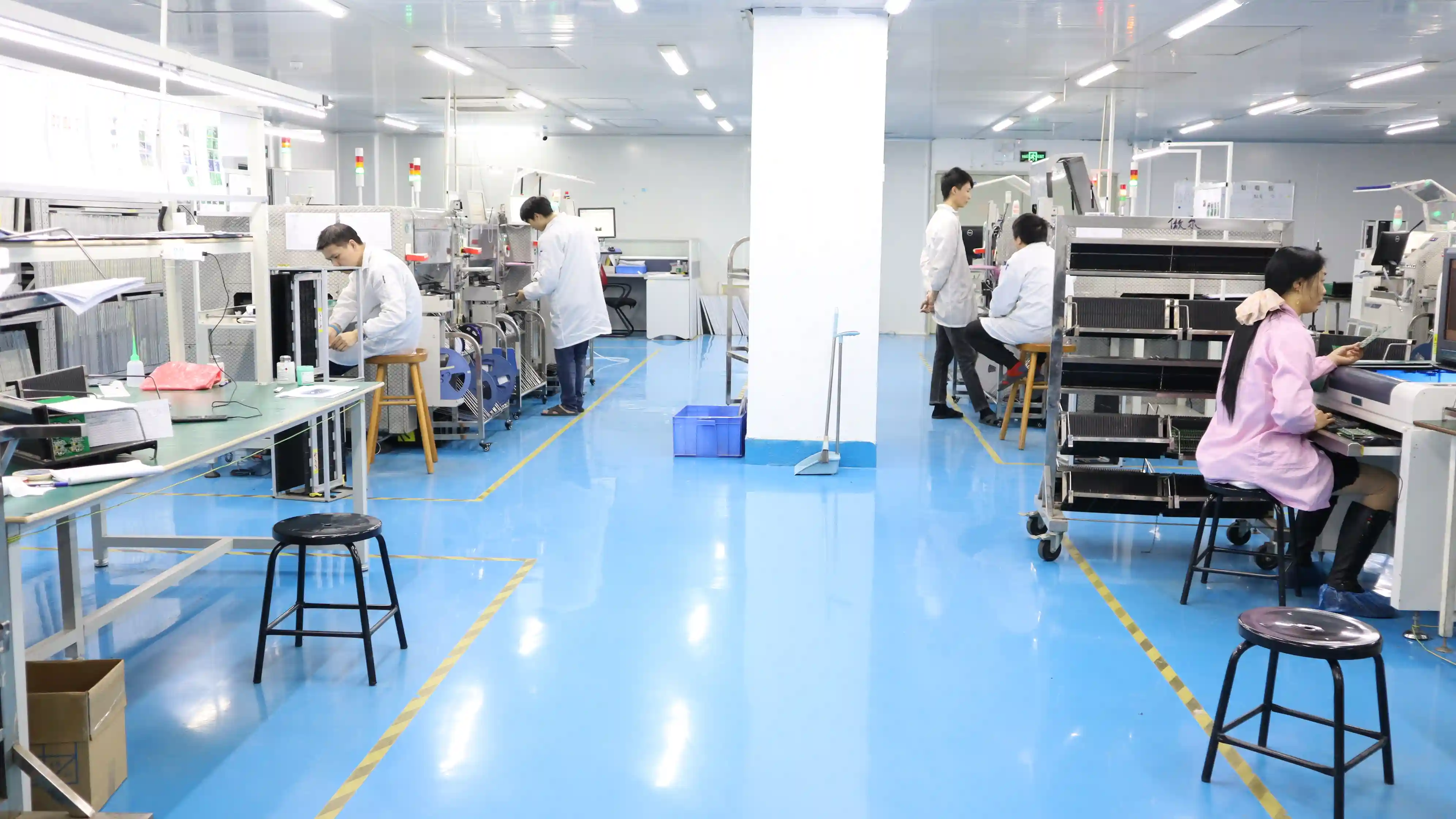
Questions that usually matter before the first prototype build
These are the issues that determine whether a connector program stays on schedule or turns into repeated fit-and-fix work.
Will the connector channel match the data-rate target?
Buyers often approve a connector family before they have fully aligned launch geometry, via transitions, and reference-plane behavior.
Can the PCB actually hold the connector tolerance window?
Finished-hole size, plating thickness, board thickness, and positional tolerance all matter on dense backplane fields.
How will power, grounding, and daughtercard mating behave in system?
Many backplanes carry both high-speed signals and meaningful power distribution.
Is the released package detailed enough for manufacturing?
A connector program usually fails in documentation before it fails on the line.
How the workflow should run
The right sequence closes risk before the connector field is buried inside a larger PCBA or chassis build.
Step 1
Review the connector family and released PCB package
We start with the connector part number, mating architecture, PCB fab data, assembly drawing, and mechanical context so we understand whether the program is.
Step 2
Align footprint, hole, plating, and stackup assumptions
Press-fit or soldered interfaces are checked against finished-hole targets, board thickness, copper balance, anti-pad geometry, and layer planning.
Step 3
Define the insertion and inspection strategy
We set the practical plan for insertion tooling, coplanarity checks, orientation control, inspection criteria, and any electrical or mechanical checks.
Step 4
Build and validate prototype or first-article hardware
Prototype work confirms the connector fit, mating behavior, chassis alignment, and handling risk before the program scales.
Step 5
Release into recurring assembly or full system build
Once the connector field is stable, the work can flow into PCBA, rack-level integration, box build, or EMS programs with cleaner documentation, lower rework.
Related planning resources
These guides are useful when the connector decision touches stackup, power distribution, or channel performance.
PCB Stackup Guide
Use this when connector launches and plane strategy need to align with impedance and power distribution targets.
Types of Power Connectors
Helpful background when the backplane mixes high-speed signal paths with dedicated power-blade or board-to-wire interfaces.
Phase Stability in RF Cable Assemblies
Useful when the backplane sits inside a broader signal chain that continues into RF or tightly controlled interconnects.
Public references worth checking
These references explain the backplane and signal concepts behind this service without sending readers to blocked standards domains.
Wikipedia: Backplane
Background on how backplanes are used to interconnect multiple modules in computing and electronics systems.
Wikipedia: Signal integrity
Useful context for why connector launches, vias, and routing transitions matter on high-speed channels.
Wikipedia: DIN 41612
A public reference point for one established family of backplane-oriented connectors and interface formats.
Frequently asked questions
Most connector issues are easier to solve before the first system build than after the mating hardware is already committed.
What do you mean by a high speed backplane connector service?
We mean manufacturing support around the connector portion of a modular backplane system: connector selection review, PCB-fit validation, press-fit or soldered loading strategy, inspection planning, and alignment with downstream assembly. The goal is to make the connector work reliably in the real product, not just on paper.
Can you support press-fit backplane connectors?
Yes. Press-fit backplane connectors depend on finished-hole control, plating thickness, annular ring margin, board thickness, insertion tooling, and inspection discipline. Those details need to match both the connector specification and the released PCB package before production starts.
How is this different from backplane PCB manufacturing?
Backplane PCB manufacturing focuses on the bare board: stackup, drilling, plating, lamination, and electrical test. This service focuses on the interconnect side of the program, where the connector family, insertion method, mating architecture, and system mechanics have to line up with that bare board.
What files help you quote a backplane connector program accurately?
The most useful package includes connector part numbers, PCB fab files, stackup notes, assembly drawings, board thickness, mechanical envelope, mating-card details, and expected build volume. If you already have SI targets or insertion-force limits, include those too.
Do high speed backplane connectors require signal-integrity review even if the connector is already selected?
Usually, yes. A connector can be nominally rated for the target data rate and still perform poorly if the launch, via field, reference planes, or board materials are misaligned. The transition around the connector matters as much as the connector family itself.
Can this service roll into box build or full EMS support?
Yes. Many buyers start with the connector and backplane problem, then continue into PCB assembly, cable integration, chassis build, and final system test. We support that handoff so the interconnect decisions stay consistent through the rest of the manufacturing flow.
Related services
Buyers usually evaluate connector integration alongside board fabrication, assembly, and downstream system build.
Backplane PCB Manufacturing
Bare-board fabrication support when the connector strategy depends on high-layer stackup and drilled-hole control.
PCB Assembly (PCBA)
Broader SMT and through-hole assembly support when the backplane contains active or mixed-technology content.
Cat6a Ethernet PCB Assembly
Connector-board assembly support when Ethernet RJ45, magnetics, shielding, and stackup control drive the manufacturing risk.
Box Build Assembly
System-level integration support for rack, chassis, and enclosure programs that continue beyond the board itself.
Obsolete Connector Replacement Service
Support for legacy backplane programs where the original interconnect family is no longer a practical sourcing option.
Connector, PCB, and system-build planning in one workflow
Send the connector part numbers and released board package
We can review the connector family, PCB constraints, assembly path, and downstream integration risk before your prototype or production build commits the wrong interconnect assumptions.