
Flexible PCB Fabrication
Flex Circuit Manufacturer for Compact, High-Reliability Electronics
PCBInsider manufactures custom flex circuits for applications where rigid boards and discrete cabling waste space, add failure points, or limit motion. We support quick-turn prototypes and production builds with polyimide materials, stiffeners, coverlay, and assembly-ready panelization.
1-10 Layers
Flex Constructions
5-7 Days
Prototype Lead Time
0.05mm
Laser Feature Class
IPC-6013
Built to Spec
What Buyers Need from a Flex Circuit Supplier
The real challenge with flex circuits is not getting a drawing fabricated once. It is producing a part that bends predictably, assembles cleanly, and scales without yield losses. These are the manufacturing controls we focus on.
Custom Single to Multilayer Flex
We manufacture flex circuits from simple single-layer jumpers to multilayer constructions for dense packaging.
Dynamic Bend Reliability
For moving applications, we optimize copper type, trace routing, and neutral-axis placement to improve cycle life.
Stiffeners, Coverlay, and Shielding
Add FR-4, PI, or stainless stiffeners where connectors or components need support.
Fine Features for Compact Electronics
Laser drilling, precision imaging, and tight registration control help us support small pad geometries and high-density interconnect areas.
DFM for Assembly Yield
Our engineers review pad design, stiffener transitions, SMT support strategy, and panelization before release.
Prototype Through Production
We support NPI builds, pilot lots, and ongoing production so you do not need to re-source once the design is validated.
Flex Circuit Capabilities
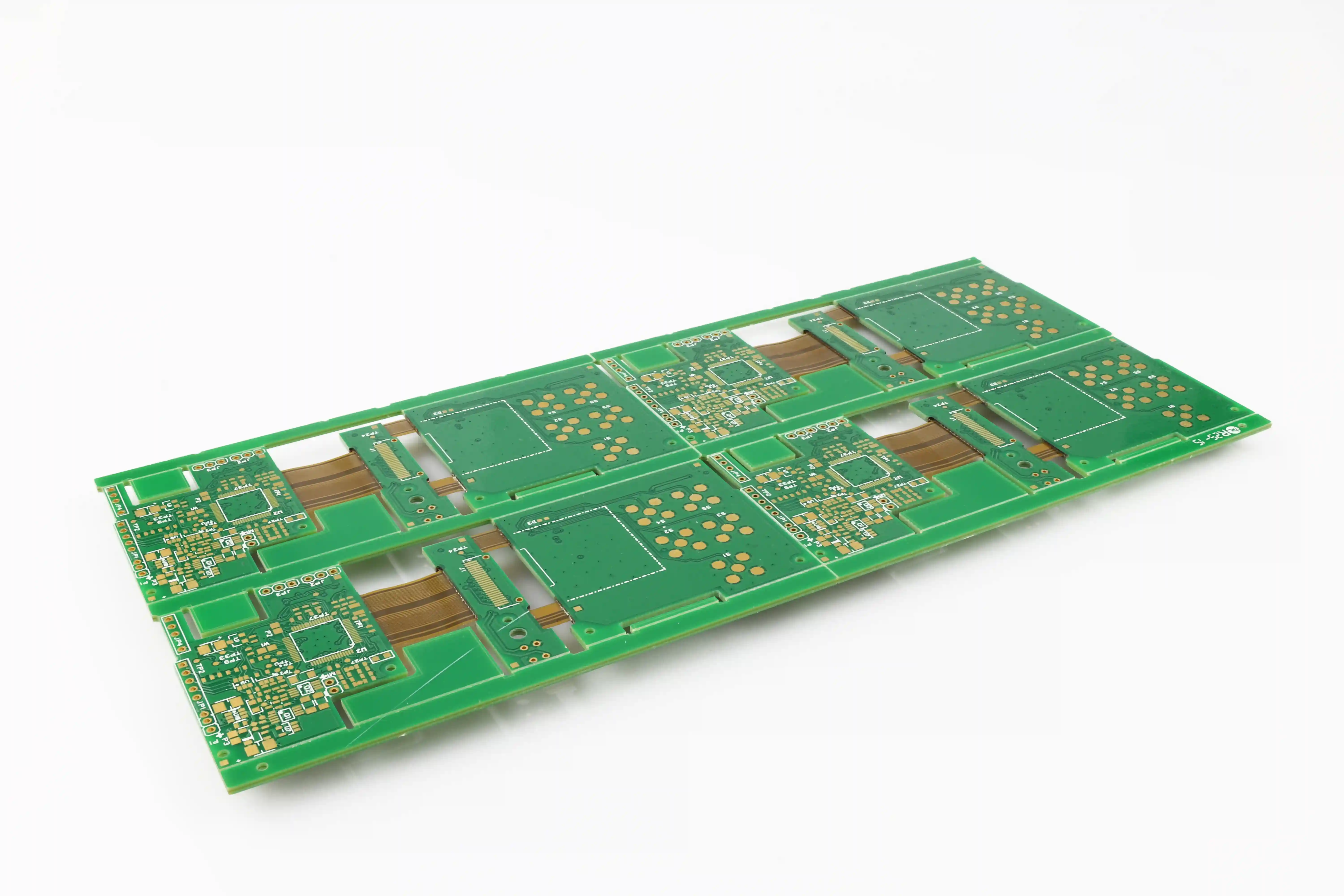
We tailor stackup, copper type, reinforcement, and finish to the mechanical realities of your product. If your team is still deciding between flex, rigid-flex, or a wire-based interconnect, we can review the tradeoffs during quoting.
| Construction | Single-sided, double-sided, multilayer flex |
| Layer Count | 1-10 layers depending on stackup and bend demands |
| Base Material | Polyimide, adhesiveless polyimide, specialty laminates |
| Copper Type | RA copper and ED copper options |
| Min. Trace / Space | 3/3 mil standard, finer by review |
| Min. Laser Via | 0.05mm class by design review |
| Surface Finish | ENIG, OSP, selective hard gold by application |
| Reinforcement | FR-4, PI, stainless stiffeners |
| Thickness Control | Custom stackup for bend and connector requirements |
| Testing | 100% electrical test, impedance verification when specified |
| Prototype Lead Time | 5-7 working days typical |
| Production Lead Time | 2-4 weeks depending on complexity and volume |
Manufacturing Workflow
1
DFM and Bend-Zone Review
We review copper balancing, bend regions, trace exits, stiffener locations, and assembly constraints before release.
2
Imaging, Etching, and Coverlay Build
Flex layers are imaged and etched with close registration control, then matched to coverlay openings and reinforcement features so exposed pads and dynamic.
3
Lamination and Reinforcement
We laminate the required stackup, bond stiffeners, and build panel support features that help the part remain flat through SMT, testing, and final system.
4
Electrical Test and Final Inspection
Every lot is electrically tested and visually inspected for registration, coverlay quality, hole accuracy, and edge condition before shipment.
Where Flex Circuits Win
Flex circuits are usually selected to save space, reduce assembly steps, or survive movement better than discrete wires and connectors. These are the programs where they add the most value.
Medical Devices
Disposable diagnostics, patient monitoring modules, imaging subsystems, and compact handheld instruments benefit from flex circuits that reduce cable bulk.
Industrial Automation
Robotic joints, encoder assemblies, servo drives, and machine vision modules use flex circuits to save space while handling vibration and repeated movement.
Aerospace and Defense
Weight-sensitive avionics, sensors, and compact control modules rely on flex circuitry when wire harness mass, connector count, and packaging volume.
Consumer and Wearable Electronics
Foldable products, cameras, displays, and wearable devices use flex circuits to route signals through tight spaces where rigid boards and round cables do.
Frequently Asked Questions
What flex circuit constructions do you manufacture?
We build single-sided, double-sided, and multilayer flex circuits using polyimide materials with RA or ED copper depending on bend-life and cost targets. We also support hybrid constructions with FR-4 stiffeners, stainless stiffeners, coverlay, and selective shielding for assembly-ready builds.
How fast can you deliver flex circuit prototypes?
Simple 1-2 layer flex prototypes typically ship in 5-7 working days after DFM approval. More complex multilayer builds, impedance-controlled designs, or parts requiring custom stiffeners and shielding generally run 8-12 working days. Expedite options are available for urgent programs.
What design files do you need for a flex circuit quote?
For accurate quoting we need Gerber or ODB++ data, stackup requirements, finished thickness targets, stiffener details, bend areas, impedance requirements, and your assembly notes. If the design is still evolving, we can review drawings and recommend a manufacturable stackup before final release.
Do you support dynamic-flex applications?
Yes. For dynamic-flex circuits we focus on rolled-annealed copper, larger bend radii, trace orientation through bend areas, and adhesive-free constructions where reliability demands it. Our engineering review flags copper balancing, pad placement, and coverlay openings that would shorten flex life.
Can you deliver flex circuits ready for SMT assembly?
Yes. We regularly build flex circuits with local stiffeners, tooling holes, panel rails, fiducials, and surface finishes such as ENIG or OSP so the parts move cleanly into SMT assembly. If you want a single supplier, we can also support PCB assembly after fabrication.
What industries use your flex circuit manufacturing service?
Our flex circuit customers include medical device OEMs, industrial automation teams, aerospace electronics companies, consumer electronics brands, and sensor developers that need compact interconnects, vibration resistance, or repeated bending performance.
Related Services
Rigid-Flex PCB Fabrication
For designs that combine stable rigid sections with dynamic flex interconnects.
Learn morePCB Manufacturing
Standard rigid PCB fabrication for the rest of your electronics platform.
Learn morePCB Assembly (PCBA)
Assembly support for stiffened flex circuits and related rigid boards.
Learn morePCB Prototype
Quick-turn prototyping when you need early design validation on a tight schedule.
Learn moreNeed a Flex Circuit Quote That Accounts for Real Manufacturing Risk?
Send your Gerbers, stackup notes, bend requirements, and assembly constraints. Our team will review the design for manufacturability before quoting so you get a part that works in production, not just on paper.
Talk to an Engineer