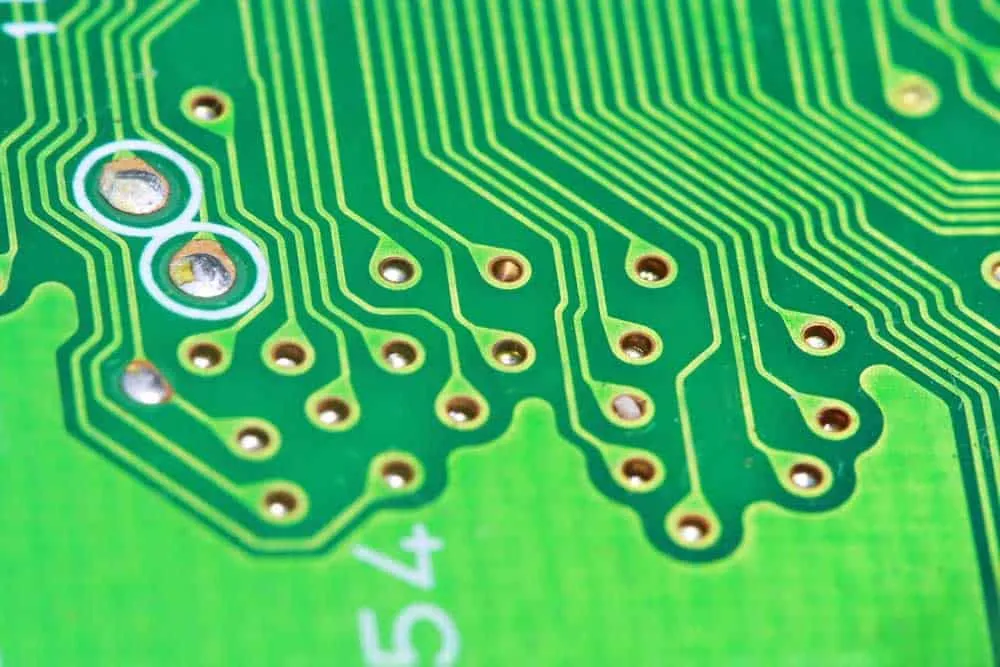
How To Identify Circuit Board Components
Here's an article that shows you how to identify circuit board components.
Here’s an article that shows you how to identify circuit board components.
As a newbie PCB designer, you might get slightly confused when identifying components on old board design layouts.
But you might see a few familiar parts when looking at assembled circuit boards.
Regardless, you should know how to identify circuit board components because the design process might involve reverse engineering.
Part of your assignment might require studying a PCB layout diagram or an assembled board before creating a new, improved design.
Read on to learn more!
From The [PCB Assembly](https://pcbinsider.com/pcb-assembly-cost)
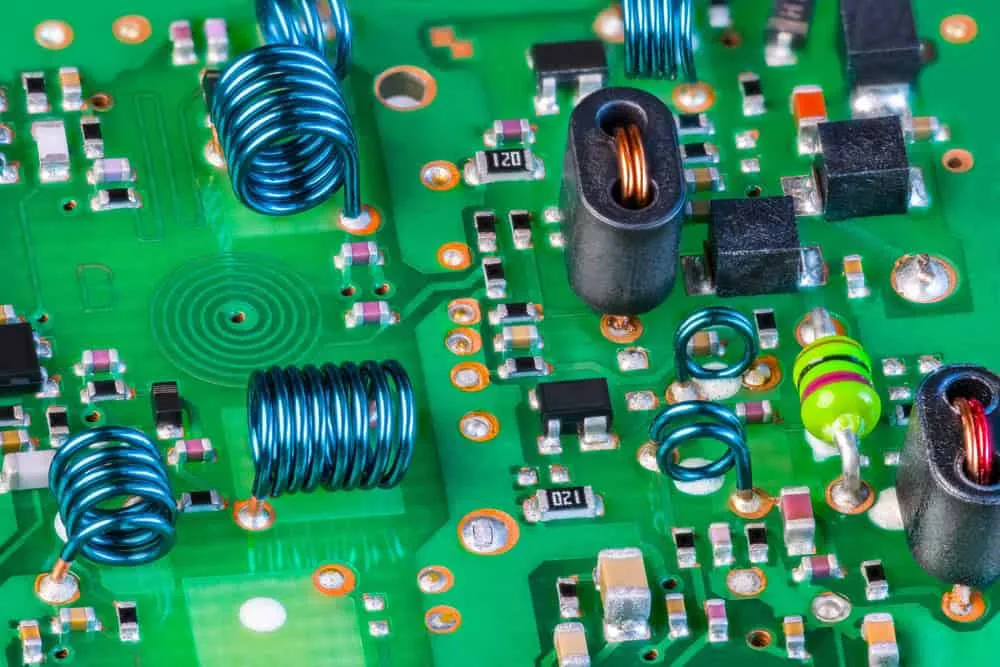
If you look at an assembled printed circuit board keenly, you will spot some information printed on select electronic components.
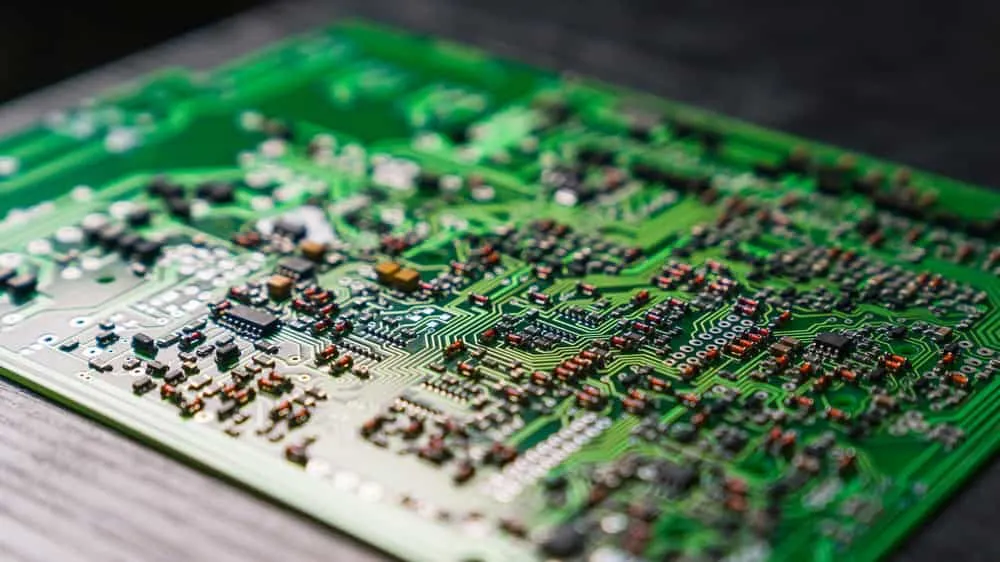
And the data will usually include the following.
- - Manufacturer
- Manufacturing Part Number (MPN)
- Component value
- Serial number
You can input this data into a search engine to learn more about the electrical component.
Parts like through-hole resistors have color coding that indicates the component value, which you can use to find replacements.
Generally, it is easier to identify through-hole components when repairing or replacing them because they are sizable.
But dealing with surface-mount technology is tricky because the pieces are tiny.
From the Bill of Materials
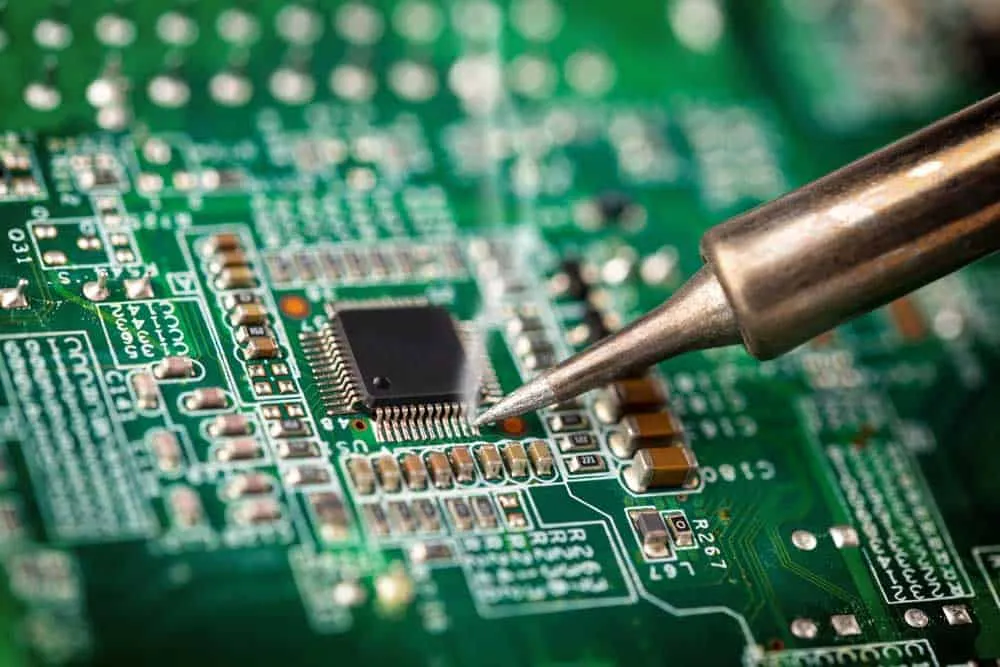
Some PCB assemblies have the component reference designators written on the silkscreen layer.
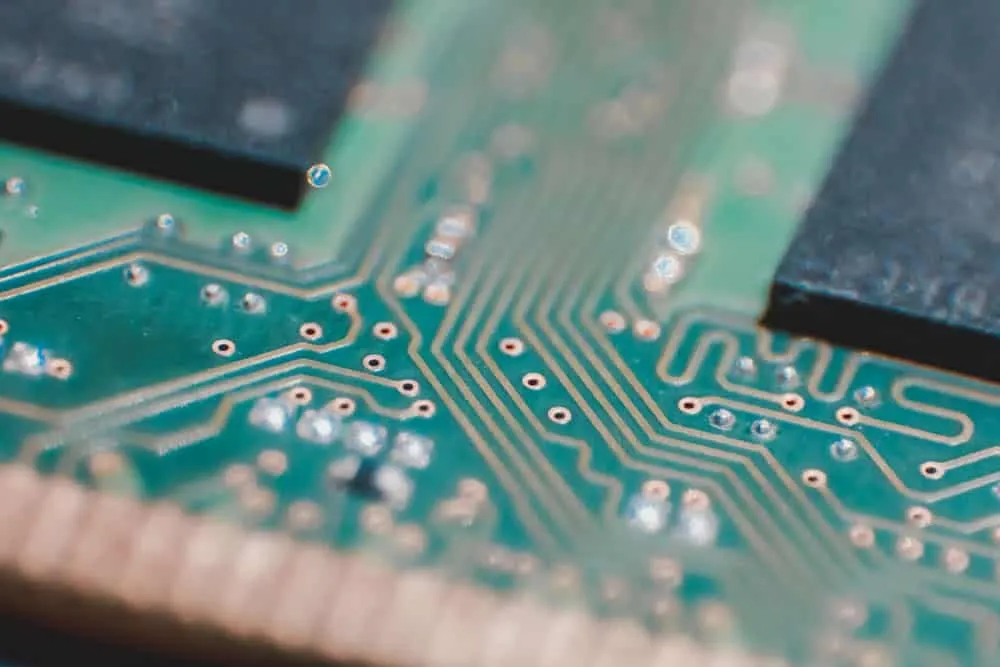
But for this identification process to work, the BOM must be complete.
A complete BPM should show the MPN (Manufacturing Part Number) or SPN (supplier part number).
These reference designators might be shortened versions of the component name of different letters.
Here are the designators for typical circuit components.
| Designator | Electronic Component Full Name | C | Capacitor | D | Diode | R | Resistor | L | Inductor | ATT | Attenuator | LED | Light Emitting Diode | Q | Transistor | POT | Potentiometer | T | Transformer | ZD/Z | Zener Diode | X | Transducer | XTAL | Crystal | Y | Crystal/Oscillator | VR | Variable Resistor | TC | Thermocouple | U or IC | Integrated Circuit | TB | Terminal Block | LS | Loud Speaker | MOV | Metal Oxide Varistor | F | Fuse | CB | Circuit Breaker | BT | Battery | BR | Bridge Rectifier | G | Oscillator | J | Jumper or Jack | P | Plug | K | Relay/Contractor | PS | Power Supply | TP | Test Point
From The Design Files
What happens if you don’t have a complete BOM? The best solution is to look for the PCB layout files until you spot the specific component.
With complete libraries, you can point a part to its supplier information, enabling straightforward identification.
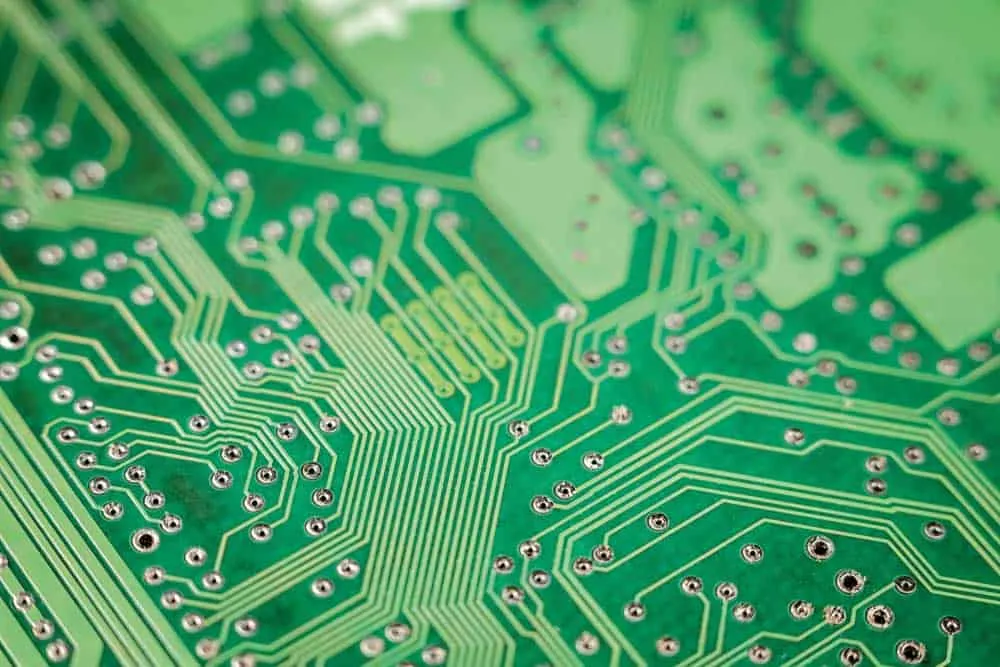
After retrieving this data, you can:
- - Search online
- Go to the BOM to compare the data
- Compare the part’s footprint with the data in the component datasheet
These three documentation methods are highly precise, and we recommend them to identify PCB components.
What if You Can’t Identify a Component From the Design Documentation?

Finding documentation to identify the components can be impossible when dealing with old PCB assemblies.
Or the old board might have the markings on its silkscreen layer scrubbed off.
In such a case, you can identify board components using either of these two methods.
Test the Component
Before testing components, you must first understand how they work.
And to understand how they work, you must know the component types, either mechanical or electrical.
Mechanical components usually have an aluminum construction, although some are bronze, copper, or steel-made.
But all operate mechanically, with their primary role being to support the PCB operations.
On the other hand, electronic components provide electrical functions and can be passive or active.
Passive Components
Passive electrical components have no control over the flow of electric current inside them.
Also, they do not directly transfer electronic signals.
Most have two leads (passive two-terminal components), and they include the following. Capacitors A capacitor stores electric charge and has a farad rating to denote its size.
Smaller capacitors can have mF (millifarad) or µF (microfarad) ratings.
Also, they can limit voltage flow across their pins.
The best way to identify these components is by looking at the color coding (color bands) on their surface.
These bands show resistance value and tolerance.
Surface-mount technology resistors are tiny and don’t have color bands.
So you might have to test the component to see if there is a voltage or electrical current drop. Fuses Fuses usually have a glass body with a visible fuse wire inside and metal caps on the glass tube ends.
So it is easier to identify them visually than test them electrically.
But a surface-mount fuse can have different physical characteristics.
So you might have to push some current through it. Inductors Inductors store electrical energy in a magnetic field as electrical current flows through them.
But if it has silkscreen markings, look for the reference designator “L” or inductor value given in:
- - H (Henry)
- mH (millihenry)
- µH (microhenry)
Connectors As the name suggests, these pieces link, connect or integrate several components.
Usually, they help attach sizable components to printed circuit boards or two PCBs together.
In most cases, connectors integrate with jumpers, forming the pins on the ends.
And these connector pins can be small or large to suit different applications.
For instance, slim connectors are ideal for connecting flat cables, while large units can plug into them. Batteries Batteries store electrical energy, meaning you can measure the voltage across their terminals to identify the component. Alternatively, you can check the component’s shape.
It is usually either coin, cylindrical, or rectangular-shaped.
Also, some batteries have green or blue shrink wrapping. You can use this external characteristic to identify the component.
Active Components
Active electrical components directly control the flow of electrical signals in the circuit.
And like the passive type, they are available in through-hole and surface mount technologies.
The three primary active components include the following. Integrated Circuits Integrated circuits are usually the brains behind the circuit and are easy to spot because they are flat and broad.
When identifying through-hole integrated circuits, consider the following.
- - These chips can come in dual or single-inline packages
- They have a long body
- The microchips contain multiple leads on one or both sides
So they are one-way current/voltage switches that can rectify AC to DC.
And the best way to identify them on circuit boards is visually.
Through-hole diodes are usually cylindrical with black, opaque glass shells and protruding leads.
But the shape can vary depending on the type, and the various types include:
- - Zener diode
- Tunnel diode
- Silicon-Controlled Rectifier (SCR)
- Bridge rectifier
- Constant-current diode
- Schottky diode
- Shockley diode
- Varicap diode
- Photodiode
But you can identify surface-mount diodes using their polarity marking.
LEDs are diodes but operate differently; they convert electrical energy into light. Transistors These electronic devices amplify, insulate, and rectify electrical signals in circuit boards and integrated circuits.
But they are best known as electronic switches because they can conduct or cut off electronic signals.
It is vital to note that transistors are tiny components.
And they can operate on extremely low voltages even without a filament current.
Also, they are available in several types, which include the following.
- - MOSFET (Metal-Oxide-Semiconductor Field-Effect Transistors)
- PNP Darlington Transistor
- N-Channel MOSFET
- PNP BJT (Bipolar Junction Transistor)
Identify the Component Function
It might not be wise to test some components (especially active ones) because the electrical current can damage them.
So try to identify the component’s function in the circuit.
You can do so by checking its pinout and the other components connected to its pins.
Wrap Up
As you can see, several ways exist of identifying circuit board components.
But the most accurate method is using the design documentation.
However, you can resort to manual identification if this information is unavailable.
This process can either be by electrical testing, identifying the component function, or visual checking.
That’s it for this article. We hope you found it insightful.
If you need help identifying these components, comment below. We’ll be in touch to assist. You can also explore our PCB assembly services and manufacturing capabilities for your next project.
Related Articles
Continue exploring similar topics
How to Identify Diodes
Learn how to identify diodes by type and polarity. Understand markings, use multimeter testing, and recognize common diode types for your electronic projects.
How to Solder Wires to a Circuit Board
Do you know how to solder wires to a circuit board? It is straightforward, but you must perform it correctly to ensure a perfect electrical connection.
How To Mix Ferric Chloride for Etching
Learn how to mix ferric chloride for PCB etching. Get the right ratios, safety tips, and step-by-step instructions for etching copper-clad boards at home.
Ready to bring your PCB design to life?
Get an engineer-reviewed quote for your custom PCB fabrication and assembly needs.
Request a Quote