Quick Turn PCB Service
Fast Turn Printed Circuit Board Manufacturers for Real Delivery Pressure
PCBInsider supports urgent PCB builds for prototype, NPI, and bridge-production programs where missing a hardware date can stall engineering, assembly, or customer approval.
If you are comparing fast turn printed circuit board manufacturers, the key question is not who promises the shortest lead time. It is who can review the board properly, lock the right fabrication path, and still ship on time. That is the service this page is built to describe.
DFM Before Release24-72 Hour Expedite WindowAssembly-Ready Packing
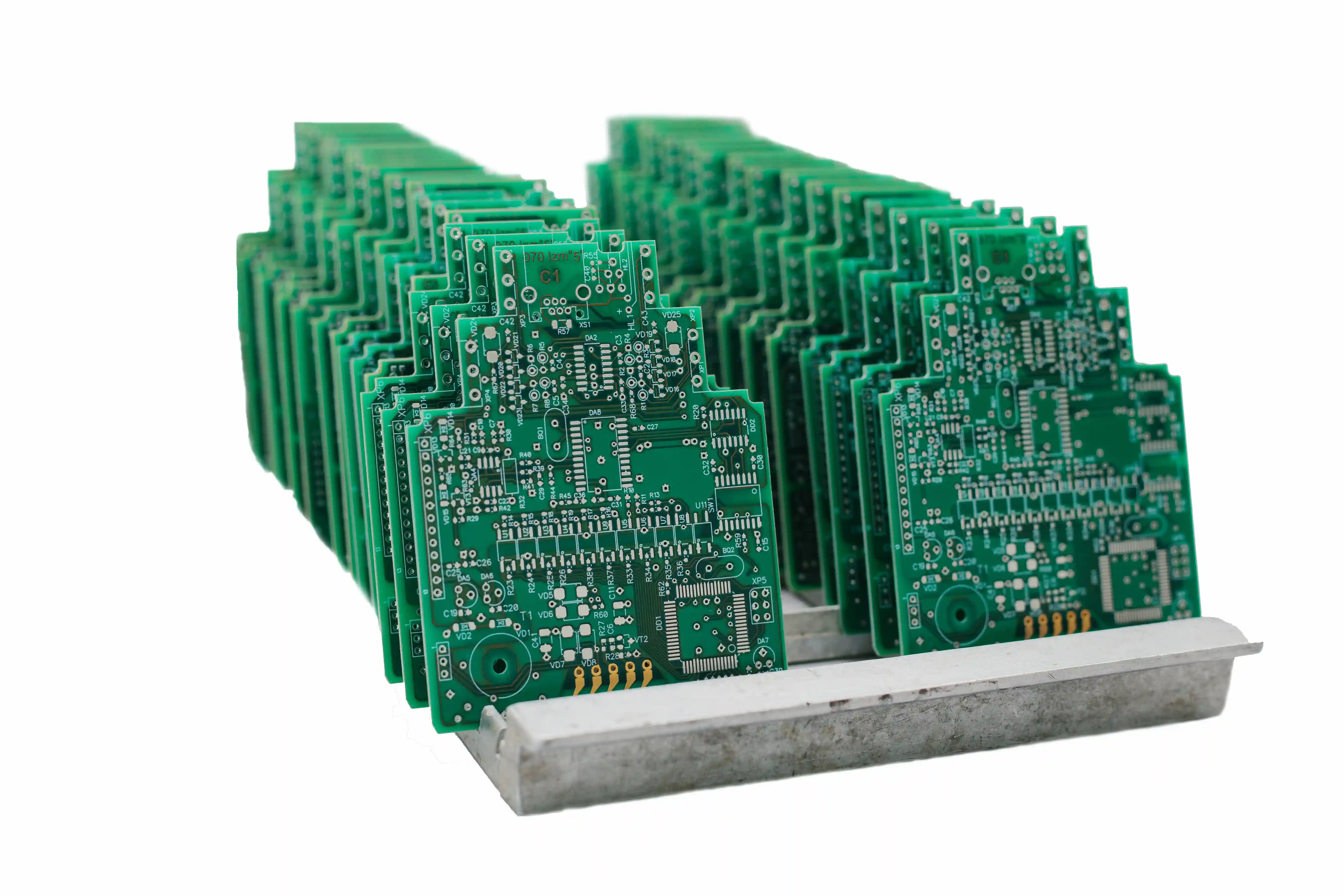
24-72h
Fast-Turn Build Window
24-72 Hrs
Expedite Window
1-10 Layers
Common Fast-Turn Range
100%
Electrical Test Coverage
DFM First
Release Discipline
What Buyers Actually Need from a Fast-Turn PCB Supplier
Speed matters, but schedule credibility matters more. The fastest supplier on paper is not useful if the board arrives late, needs engineering clarification, or creates avoidable PCBA issues.
Fast Turn Without Blind Scheduling
Urgent PCB orders fail when suppliers promise speed before reviewing manufacturability.
Prototype, NPI, and Bridge Production
The service is built for engineering teams that need more than a hobby prototype.
Assembly-Ready Fabrication Controls
Panel rails, fiducials, coupon strategy, and surface-finish choices are reviewed up front so the boards arrive ready for placement, reflow, and inspection.
Risk-Based DFM Review
We focus the review on the features most likely to break an expedite schedule: annular ring margin, impedance targets, solder mask clearance.
Global Supply Support
For buyers comparing fast turn printed circuit board manufacturers, the real differentiator is supply continuity.
Inspection Data You Can Use
Electrical test, dimensional checks, and build notes are documented so your engineering and sourcing teams can decide whether to release the next build.
Quick-Turn PCB Capability Snapshot
Fast-turn work only succeeds when the board stays inside a manufacturable window. These ranges reflect the builds we can move quickly while still keeping process control intact.
| Service Focus | Quick-turn PCB fabrication for prototype, NPI, and bridge production |
|---|---|
| Typical Layer Range | 1-10 layers for fast-turn builds; higher complexity by review |
| Materials | FR-4, high-Tg FR-4, selected specialty laminates subject to stock |
| Min. Trace / Space | 4/4 mil standard quick turn, finer features by engineering review |
| Min. Mechanical Drill | 0.20 mm standard quick turn |
| Surface Finish | HASL, lead-free HASL, ENIG, OSP depending on schedule |
| Copper Weight | 0.5-2 oz common for accelerated builds |
| Impedance Control | Single-ended and differential structures with stackup review |
| Test Coverage | 100% electrical test on completed production panels |
| Typical Expedite | 24-72 hours for simpler builds after DFM approval |
| Bridge Production | Low-volume repeat runs coordinated with assembly demand |
| Shipping | Express global delivery aligned to production completion |
Where This Service Fits Best
Critical Prototype Spins
When layout is moving quickly and the next design review depends on real hardware, fast-turn fabrication cuts waiting time without sacrificing the build.
NPI and EVT / DVT Programs
Hardware teams use this service to support engineering validation, design verification, and pilot stages where lead time matters but process control still.
Bridge Orders Before Volume Release
If the production transfer is not fully open yet, we can support short runs that keep assembly lines active while final sourcing, panel optimization.
PCB Plus Assembly Coordination
Boards intended for immediate SMT build benefit from one planning loop.
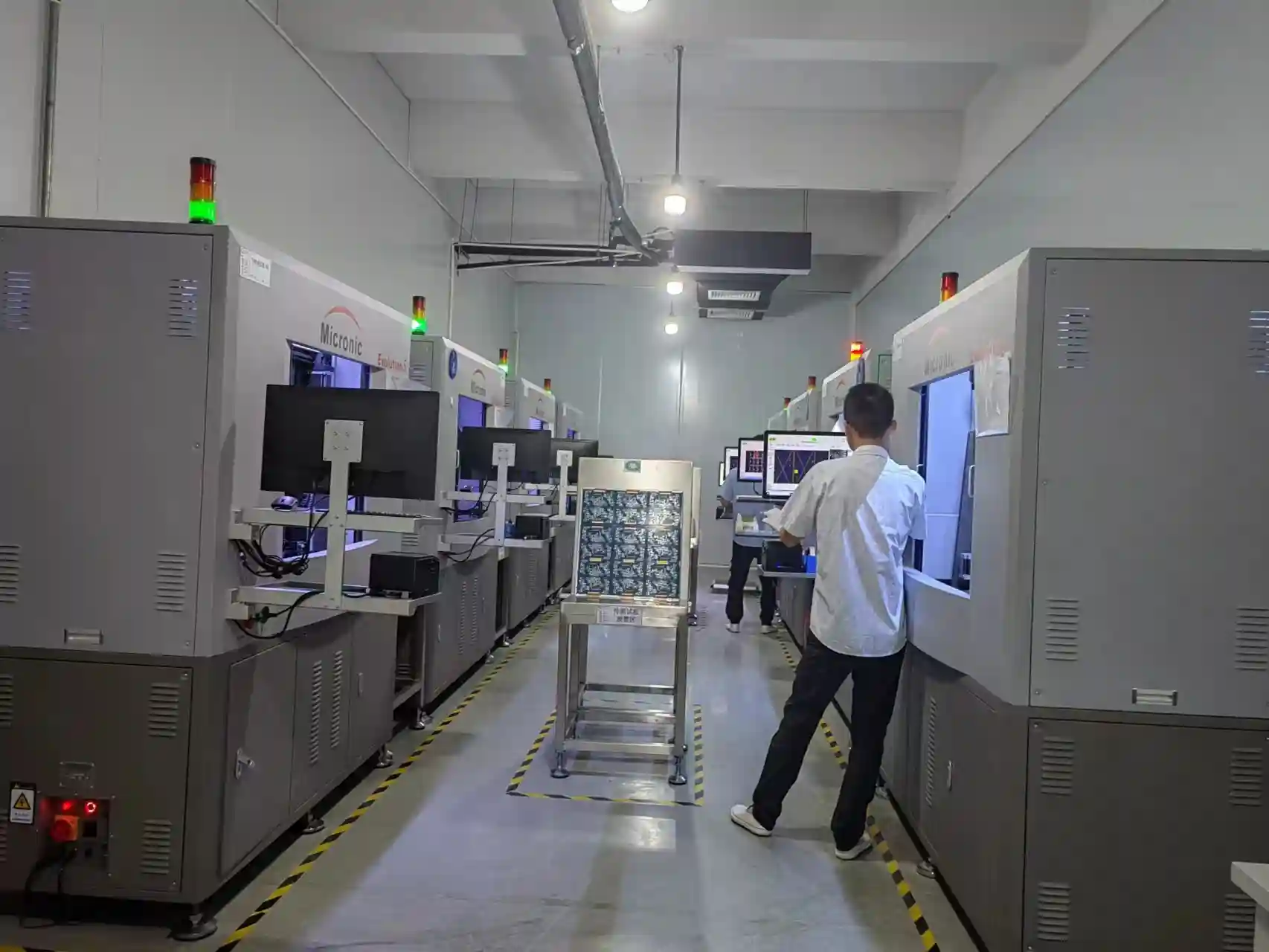
Fast Turn Still Needs Test Discipline
Electrical verification is often the last point where a rushed board can still be caught before it consumes assembly time. That is why test coverage remains part of the accelerated process instead of being treated as optional.
Our Fast-Turn Manufacturing Process
Compressing lead time does not mean skipping steps. It means removing indecision, front-loading engineering review, and keeping every operation aligned to the delivery date.
1
File Intake and Constraint Check
We review Gerber or ODB++ data, fab notes, stackup intent, impedance targets, and shipping deadline.
2
Fast-Turn DFM Signoff
Engineering checks trace and space, drill aspect ratio, mask clearance, copper balance, material availability, and panel strategy.
3
Priority Fabrication Window
Approved jobs move through tooling, imaging, plating, etching, solder mask, and finish on an accelerated queue.
4
Electrical Test and Release
Completed boards receive electrical verification and final inspection before packing.
Comparing Fast-Turn Supplier Models
Different supplier types solve different problems. For urgent commercial builds, the right choice depends on what happens after the boards arrive.
Prototype Shops
- Good for simple boards and low cost
- Often weaker on DFM feedback for downstream assembly
- Can struggle when quick-turn jobs need repeatable bridge quantities
Fast Turn Manufacturers with EMS Support
- Better fit when the same board must move into PCBA immediately
- Can review panelization, finish, and handling from the assembly perspective
- Reduces supplier handoff risk on urgent builds
Fast-Turn PCB FAQs
Common questions from sourcing teams and hardware engineers evaluating quick-turn PCB suppliers.
What do fast turn printed circuit board manufacturers need to quote accurately?
At minimum we need Gerber or ODB++ files, drill data, stackup intent, finished copper and thickness requirements, surface finish, quantity, and the true delivery deadline. For impedance-controlled boards, include target values and any preferred dielectric materials so the stackup can be checked before we commit.
How fast can you deliver quick-turn PCB orders?
Simple 1-4 layer boards that pass DFM cleanly can often move in 24-72 hours. More complex multilayer, impedance-controlled, heavy-copper, or specialty-material jobs need a longer review because compressing the schedule too far increases yield risk and late surprises.
How is this service different from your PCB prototype page?
The PCB prototype service focuses on rapid early hardware. This fast-turn PCB manufacturing page is built for buyers evaluating suppliers for urgent commercial work, including NPI and bridge production, where schedule credibility, assembly readiness, and repeatability matter as much as raw speed.
Can you support quick-turn boards that go directly into assembly?
Yes. We regularly plan urgent fabrication around downstream assembly constraints such as panel rails, fiducials, finish compatibility, board flatness, and packaging for SMT handling. That prevents the common problem of getting boards quickly but losing time before placement can start.
What usually delays a fast-turn PCB order?
The biggest causes are incomplete fabrication notes, unrealistic layer or material combinations, impedance requirements without stackup detail, nonstandard finishes, and late engineering changes after release. Most schedule risk can be removed during the first DFM pass.
Need a Fast-Turn PCB Partner That Will Not Guess on Lead Time?
Send the manufacturing package, target quantity, and real deadline. We will review the board, flag schedule risks, and recommend the fastest build path that still makes technical sense.
- DFM review before fabrication release
- Electrical test included on completed boards
- Quote support for PCB plus assembly programs
Related Services and Resources
Continue from quick-turn fabrication into assembly, quoting, and file-preparation resources.
PCB Prototype
Low-quantity prototype builds with fast engineering turnaround.
PCB Manufacturing
Broader fabrication capabilities from prototype through production.
PCB Assembly
SMT, through-hole, and mixed-technology assembly support.
PCB Cost Estimator
Estimate cost impact before releasing the next board build.
Gerber Viewer
Review manufacturing files before you send the RFQ package.
Gerber File Guide
Reduce quoting and release delays with cleaner manufacturing data.