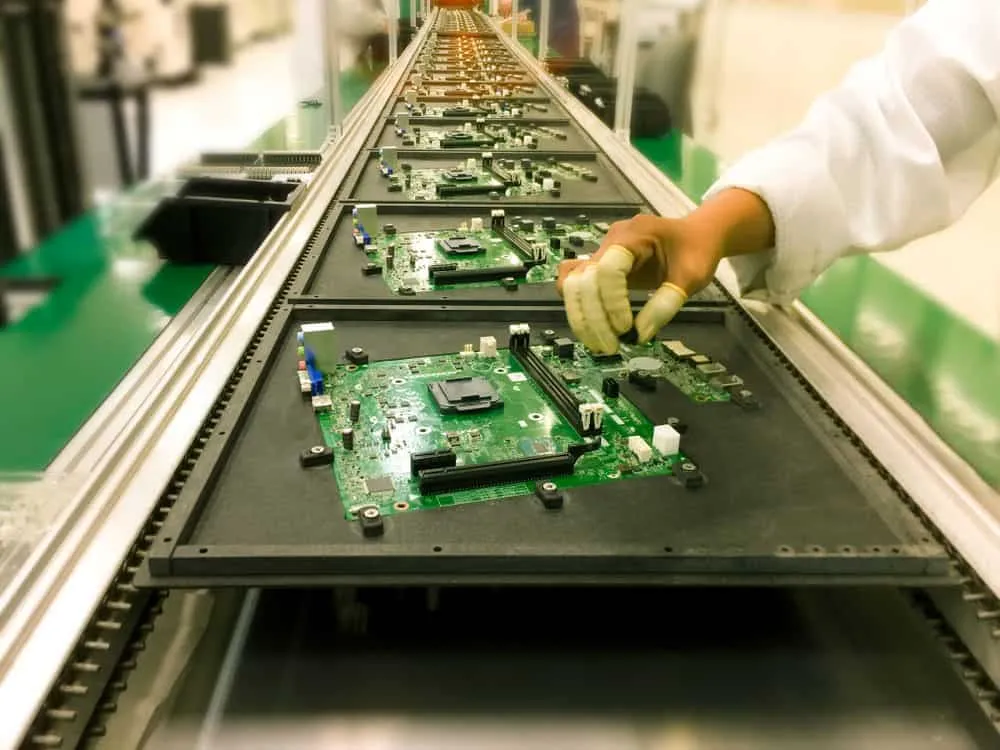
Top 18 Electronic Assembly Companies in the SMT Industry: 2025 Guide
Comprehensive guide to leading electronic assembly and EMS companies worldwide, covering SMT capabilities, selection criteria, and industry trends.
Selecting the right electronic assembly partner represents one of the most consequential decisions in bringing an electronic product to market. Surface mount technology (SMT) has become the dominant approach for printed circuit board assembly, enabling the compact, reliable electronics that power modern devices. This guide profiles eighteen leading electronic assembly companies and provides frameworks for evaluating potential manufacturing partners.
Understanding SMT in Electronics Assembly
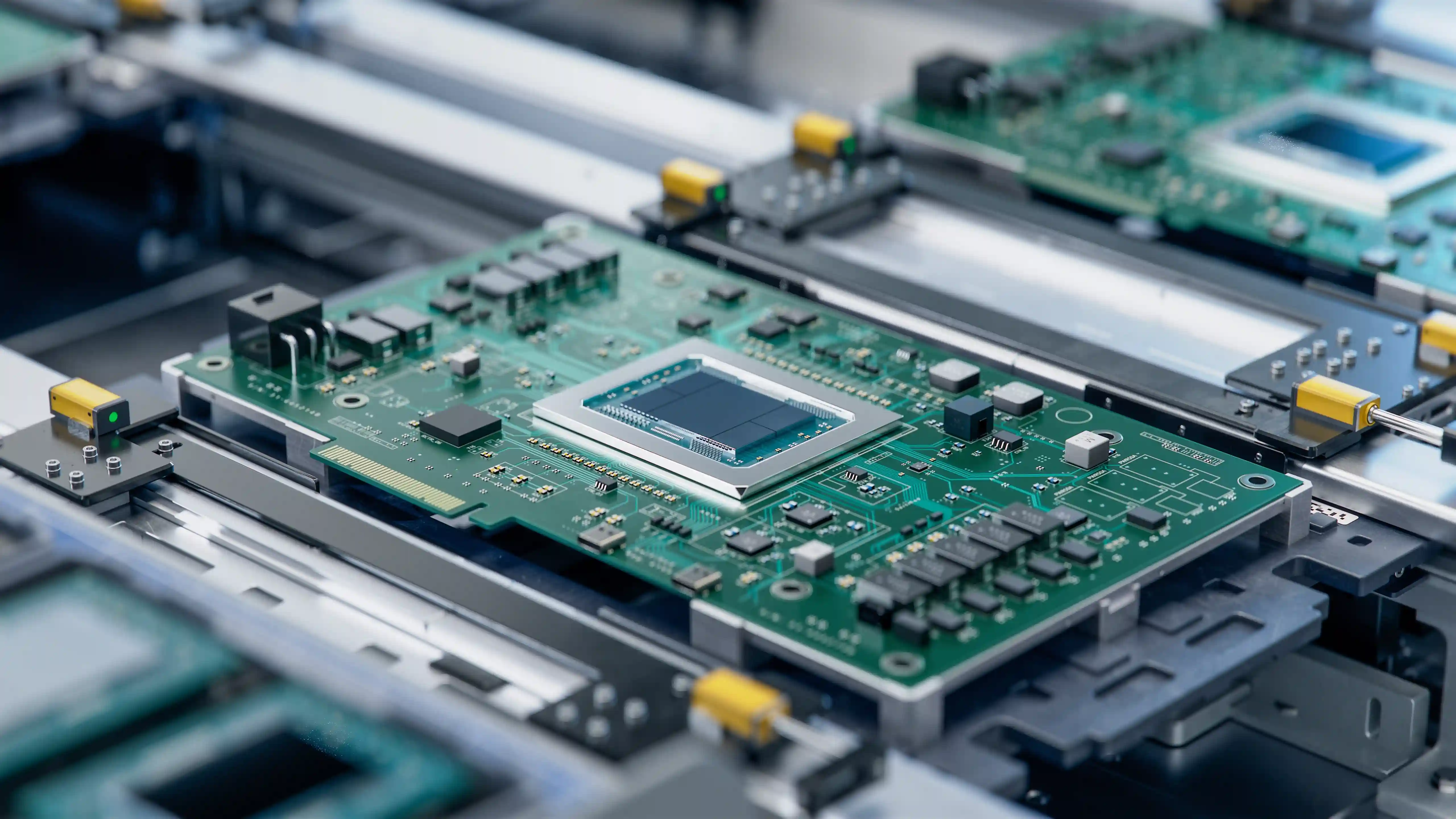
Surface mount technology revolutionized electronics manufacturing by enabling components to mount directly onto PCB surfaces without requiring through-hole connections. This approach delivers several critical advantages that have made SMT the preferred assembly method for virtually all modern electronics.
Higher component density represents perhaps the most significant SMT benefit. Surface mount components occupy far less board space than their through-hole equivalents, enabling increasingly compact product designs. Modern smartphones, wearables, and IoT devices would be impossible without SMT's space efficiency. Automated assembly provides another major advantage, with high-speed pick-and-place machines capable of positioning thousands of components per hour with exceptional accuracy.
Component miniaturization continues advancing with SMT technology. Passive components now reach 0201 and even 01005 sizes (just 0.4mm x 0.2mm), while advanced packaging like micro-BGAs enables dense integration of complex integrated circuits. Reliability improvements compared to through-hole assembly result from more consistent solder joints and reduced thermal stress during assembly.
Professional SMT assembly requires substantial capital investment in advanced equipment including high-speed placement machines, precision solder paste printers, reflow ovens with controlled thermal profiles, and automated optical inspection systems. Leading manufacturers also maintain rigorous process controls and comprehensive testing capabilities to ensure consistent quality across production volumes.
Top Electronic Assembly Companies Worldwide
1. Foxconn (Hon Hai Precision Industry)
Foxconn dominates the global EMS industry with manufacturing scale unmatched by any competitor. The Taiwanese company operates massive facilities across Asia, Europe, and the Americas, employing over one million workers worldwide. Foxconn's client roster includes Apple, Amazon, Microsoft, and numerous other technology leaders requiring high-volume production capabilities.
The company has invested heavily in automation and AI-driven manufacturing processes to improve efficiency and quality consistency. Foxconn's enormous scale enables cost efficiencies and rapid production ramp-ups that smaller providers cannot match, making it the preferred partner for consumer electronics requiring millions of units annually.
2. Jabil Inc.
Jabil operates as one of the world's largest diversified EMS providers from its St. Petersburg, Florida headquarters. The company runs over 100 manufacturing facilities worldwide, serving healthcare, automotive, industrial, and consumer electronics customers with comprehensive design-through-fulfillment capabilities.
Jabil's approach emphasizes end-to-end product realization, engaging with customers from initial concept through engineering, manufacturing, and logistics support. The company maintains certifications aligned with diverse industry requirements and structures operations through specialized business units focused on specific market segments.
3. Flex Ltd.
Flex ranks among the three largest global EMS and ODM providers, operating production facilities in over 30 countries with approximately 172,000 employees. Dual-headquartered in Singapore and San Jose, California, Flex serves customers ranging from startups to Fortune 100 corporations across automotive, industrial, healthcare, consumer products, and enterprise computing sectors.
The company provides design engineering, manufacturing, and supply chain services enabling customers to outsource complete product programs. Flex holds certifications including ISO 9001, ISO 14001, ISO 13485, TL 9000, and IATF 16949 for automotive applications.
4. Pegatron Corporation
Pegatron has established itself as a top-tier EMS provider, particularly strong in consumer electronics with growing presence in automotive applications. The Taiwanese company specializes in computing and communications devices, providing comprehensive services from product design and prototyping through mass production.
Pegatron's manufacturing capabilities support high-volume production of complex consumer devices requiring precise assembly and rigorous quality control. The company continues expanding beyond traditional computing products into emerging categories including automotive electronics and industrial IoT applications.
5. Sanmina Corporation
San Jose-based Sanmina generates approximately $8 billion annually serving communications, cloud computing, industrial IoT, defense, medical, and automotive industries. The company operates roughly 80 production facilities worldwide, providing localized manufacturing support for global OEM customers.
Sanmina's capabilities span the complete electronics manufacturing value chain including PCB fabrication, SMT assembly, system integration, and aftermarket support. The company emphasizes complex, high-reliability manufacturing for demanding applications requiring exceptional quality and regulatory compliance.
6. Celestica Inc.
Toronto-headquartered Celestica operates manufacturing sites across 15 countries, generating approximately $8 billion in annual revenue. The company provides end-to-end solutions spanning design, manufacturing, and aftermarket services for aerospace, defense, healthcare, industrial, and communications customers.
Celestica's approach emphasizes collaborative partnerships with customers requiring specialized manufacturing expertise. The company has developed particular strength in high-reliability applications where quality requirements exceed standard commercial specifications.
7. Universal Scientific Industrial (USI)
USI was established in 1980 and generates over $6 billion annually from manufacturing sites across Asia, Europe, and the Americas. The Taiwanese company provides SMT assembly for telecom, automotive, industrial, medical, IoT, and appliance applications.
USI's Huntsville, Alabama facility supports high-mix assembly and box-build manufacturing for North American customers. The company's acquisition of Asteelflash in 2021 significantly expanded European manufacturing capabilities and customer relationships.
8. Benchmark Electronics
Tempe, Arizona-based Benchmark serves test and instrumentation, telecommunications, computing, industrial, medical technology, and defense customers with electronics manufacturing and engineering services. The company's SMT capabilities include high-speed chip placement, fine-pitch assembly, and advanced BGA processing.
Benchmark's One Benchmark methodology aims to provide seamless production transfers between facilities, enabling customers to leverage optimal manufacturing locations without duplicating qualification efforts. The company maintains compliance with ISO, FDA, ANSI/ESD, IPC, and ITAR requirements.
9. Plexus Corp.
Plexus provides SMT assembly, engineering services, and customized product realization focused on mid-to-low volume, higher complexity programs. Headquartered in Neenah, Wisconsin, the company serves industrial, healthcare, communications, and aerospace/defense customers through a dozen global facilities.
Plexus emphasizes engineering collaboration and design optimization rather than pure manufacturing scale. The company maintains certifications including ISO 9001, ISO 13485, IATF 16949, and ANSI ESD S20.20, with ITAR registration supporting defense sector requirements.
10. Compal Electronics
Taiwanese firm Compal Electronics generates approximately $30 billion in annual revenue primarily as an Original Design Manufacturer (ODM). The company produces laptops, monitors, tablets, and televisions for major brands including Apple, Lenovo, and Dell.
Compal's scale and design capabilities make it a preferred partner for brands seeking turnkey solutions encompassing product design and manufacturing. The company continues expanding beyond traditional computing products into smart home devices and automotive electronics.
11. Venture Corporation Limited
Singapore-based Venture Corporation provides technology services, products, and solutions across life science, diagnostic, and medical device markets alongside computing, printing, and networking equipment. The company emphasizes higher-value manufacturing where engineering expertise differentiates its capabilities.
Venture's approach focuses on strategic customer partnerships requiring sophisticated manufacturing support beyond basic SMT assembly. The company has developed particular expertise in precision medical device manufacturing requiring rigorous regulatory compliance.
12. Sumitronics Corporation
Tokyo-headquartered Sumitronics focuses on high-reliability electronics manufacturing for communications, automotive, industrial equipment, aerospace/defense, and medical applications. The company emphasizes mid-volume production of complex assemblies requiring exceptional quality standards.
Sumitronics' factories feature flexible SMT equipment engineered for rapid changeovers between production runs. The company maintains IATF 16949, ISO 14001, ISO 13485, and ISO 9001 certifications supporting diverse customer requirements.
13. Zollner Elektronik AG
German company Zollner employs over 12,000 people across manufacturing facilities in low-cost regions and Germany. The company provides full system manufacturing and SMT assembly for industrial electronics, automotive, telecommunications, measurement/control, and medical technology customers.
Zollner's technical expertise focuses on mid/high-mix, low-to-medium volume, and highly complex assemblies. Services support complete product lifecycles from prototype development through production and aftermarket support including end-of-life management.
14. Creation Technologies
Burnaby, British Columbia-based Creation Technologies operates manufacturing locations across North America serving aerospace, defense, telecommunications, medical, industrial, and IoT customers. The company specializes in quick-turn prototyping and low-to-medium volume production.
Creation Technologies' capabilities span SMT assembly, through-hole processing, box build, cable assembly, precision metalwork, and complex system integration. The company maintains ISO 9001 and ISO 13485 certifications, uses IPC Class 3 workmanship standards where specified, and supports defense-sector work with ITAR compliance.
15. SigmaTron International
SigmaTron provides PCB assemblies and integrated electronic products from facilities in the United States, Mexico, and China. Headquartered in Elk Grove Village, Illinois, the company serves customers ranging from startups to Fortune 100 OEMs.
SigmaTron offers engineering assistance, in-house PCB fabrication, component procurement, SMT and through-hole assembly, systems integration, testing, and order fulfillment. The integrated approach enables single-source support for complete product programs.
16. IEC Electronics
Newark, New York-based IEC Electronics specializes in low-to-medium volume, high-complexity assemblies meeting stringent quality and reliability requirements for medical, aerospace, defense, industrial, and instrumentation applications.
IEC's capabilities include PCB fabrication and assembly, box build, cable harnessing, precision sheet metal, and reliability testing. Manufacturing sites in New York, Massachusetts, and California provide regional support with optimized logistics.
17. Kimball Electronics
Jasper, Indiana-headquartered Kimball Electronics provides manufacturing services and engineered solutions for automotive, industrial, medical, public safety, and smart building customers. The company operates facilities across the US, Mexico, China, Thailand, Poland, and Vietnam.
Kimball emphasizes rapid prototyping, low-to-medium volume production, and product lifecycle support. Manufacturing capabilities extend beyond SMT to include injection molding, testing, and finishing operations enabling integrated product solutions.
18. KeyTronic Corporation
Spokane Valley, Washington-based KeyTronic provides full-service EMS including engineering, PCB assembly, systems integration, and precision electromechanical assemblies. The company supports US-based manufacturing for customers requiring domestic production.
KeyTronic works with both small enterprises and multinational OEMs, engineering manufacturing processes for quality, efficiency, and responsiveness. Sites maintain certifications including ISO 9001, ISO 13485, IATF 16949, ANSI ESD S20.20, and ITAR compliance.
Key SMT Manufacturing Capabilities to Evaluate
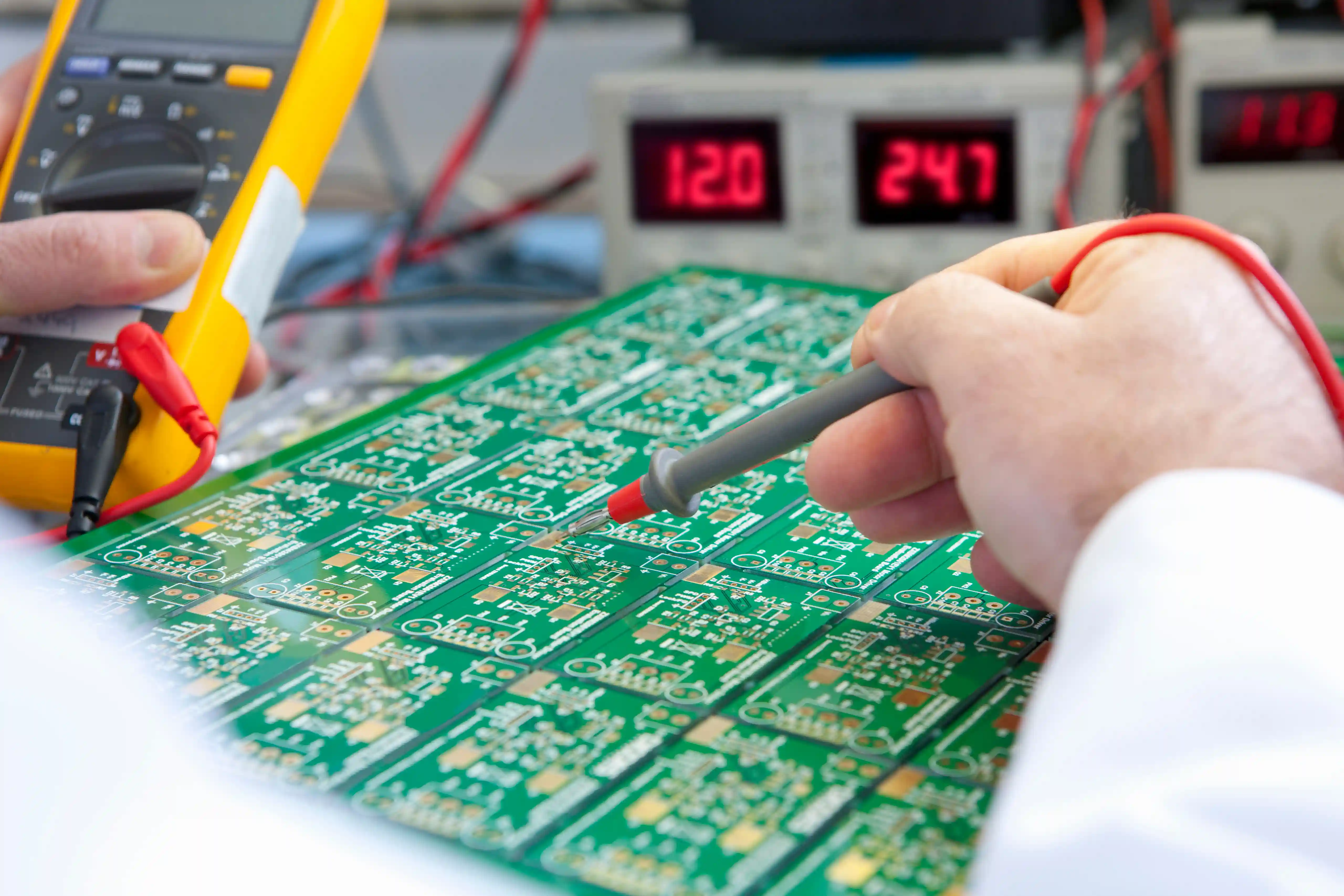
When selecting an electronic assembly partner, evaluate these critical SMT manufacturing capabilities:
Equipment and Automation: Assess placement machine capabilities including speed, accuracy, and component range. High-speed chip shooters, multi-head placement systems, and modern reflow ovens with precise thermal control indicate investment in production efficiency and quality.
Complex Assembly Handling: Verify capability with fine-pitch components, ball grid arrays (BGAs), micro-BGAs, and quad flat no-lead (QFN) packages. These advanced component types require specialized equipment, processes, and inspection capabilities.
Testing Infrastructure: Confirm in-circuit testing, functional testing, and environmental stress screening capabilities appropriate for your reliability requirements. Comprehensive testing catches defects before shipment, protecting product quality and customer relationships.
Flexible Production Setups: Evaluate changeover times between product runs and minimum batch sizes. Quick-turn capability and small batch efficiency demonstrate responsiveness for high-mix manufacturing environments.
Process Engineering Support: Look for design for manufacturing (DFM) analysis, test development, inspection optimization, and continuous improvement programs. Strong process engineering prevents production issues and optimizes yields.
Quality Certifications: Verify qualifications appropriate for your industry including ISO 9001, ISO 13485 for medical devices, IATF 16949 for automotive, documented aerospace quality controls, and ITAR registration for defense applications.
Additional Selection Considerations
Beyond core manufacturing capabilities, evaluate these factors when selecting an EMS partner:
Engineering Services Breadth: Assess design support capabilities including schematic review, layout optimization, component selection guidance, and test development. Partners offering comprehensive engineering support add value beyond basic assembly.
Supply Chain Expertise: Evaluate component procurement capabilities, approved vendor networks, inventory management approaches, and supply risk mitigation strategies. Strong supply chain management prevents production interruptions and optimizes material costs.
Program Management Approach: Understand new product introduction (NPI) processes, milestone tracking methods, and communication protocols. Structured program management ensures smooth transitions from development through production ramp.
Geographic Fit: Consider manufacturing locations relative to your target markets, engineering teams, and logistics requirements. Regional manufacturing can reduce lead times, shipping costs, and tariff exposure.
Technology Infrastructure: Assess ERP systems, manufacturing execution systems (MES), and collaboration tools enabling real-time visibility into program status. Modern IT infrastructure supports efficient communication and data-driven decision making.
Industry Experience: Verify experience serving your specific industry, understanding relevant compliance requirements, quality standards, and customer expectations. Domain expertise accelerates new program launches and reduces risk.
Trends Shaping Electronics Assembly
Several trends are reshaping electronic assembly capabilities and requirements:
Continued Miniaturization: Component sizes continue shrinking while density increases, requiring ever more precise placement equipment and process controls. Assembly partners must continuously invest to maintain capability with leading-edge component packages.
Advanced Automation: Robotics, artificial intelligence, and machine learning increasingly augment human capabilities in electronics manufacturing. 3D automated optical inspection, smart material handling, and AI-assisted quality analysis improve consistency and efficiency.
Flexible and Rigid-Flex Assemblies: Complex products increasingly integrate multiple PCBs into folded, multilayer assemblies requiring specialized manufacturing expertise. Partners must demonstrate capability with these non-traditional constructions.
High-Frequency Design: 5G telecommunications, automotive radar, and advanced wireless applications drive demand for high-frequency assembly requiring RF-specific equipment and process controls.
Sustainability Focus: Environmental considerations increasingly influence manufacturing decisions. ENERGY STAR certified facilities, lead-free processing, and comprehensive environmental compliance demonstrate commitment to sustainable operations.
Supply Chain Resilience: Recent disruptions have emphasized the importance of supply chain diversification and risk management. Leading EMS providers offer multi-source strategies and geographic flexibility to mitigate single-point-of-failure risks.
Summary
Selecting the right electronic assembly partner significantly impacts product success, from development efficiency through production quality and cost management. The companies profiled in this guide represent proven capabilities across diverse market segments and production volumes. Evaluate potential partners based on technical capabilities, industry experience, quality systems, and collaborative relationship potential to identify the optimal fit for your specific program requirements.
For companies seeking responsive electronic assembly services with strong engineering support, WellPCB provides comprehensive SMT capabilities backed by rigorous quality systems. Contact WellPCB for a quote on your electronic assembly requirements.
Frequently Asked Questions
What are the main benefits of SMT for electronics assembly?
Surface mount technology delivers several key advantages including dramatically higher component density enabling compact product designs, automated assembly processes supporting fast production throughput, improved solder joint reliability compared to through-hole connections, and component miniaturization enabling products that would otherwise be impossible. SMT has become the dominant assembly technology due to these significant benefits.
What types of electronics are not suitable for SMT?
While most modern electronics leverage SMT, certain applications may require through-hole components. High-power and high-voltage parts sometimes need through-hole connections for thermal and mechanical reasons. Large connectors or specialty components with through-hole leads may lack surface mount equivalents. Components requiring isolation from PCB thermal effects and unusually shaped parts not easily surface mounted represent additional exceptions. Engineers evaluate trade-offs between SMT and through-hole when selecting components for each design.
How should you evaluate potential EMS partners?
Important evaluation criteria include SMT manufacturing capabilities and production capacity, in-house engineering expertise for design optimization, supply chain capabilities for component sourcing, quality certifications appropriate for your industry, program management structure and NPI processes, production flexibility for varied batch sizes and quick turnaround, and cultural fit enabling effective collaboration. Assess both technical capabilities and relationship aspects to determine the best EMS partner for your program.
What is the difference between EMS and ODM?
Electronics Manufacturing Services (EMS) companies manufacture products designed by their customers, providing assembly and potentially engineering support while the customer retains product ownership and design control. Original Design Manufacturers (ODM) design and manufacture products that customers then sell under their own brands. Some companies offer both EMS and ODM services depending on customer requirements.
Related Articles
Continue exploring similar topics
Top PCB Manufacturers in Canada 2025: Complete Industry Guide
Comprehensive guide to PCB manufacturers in Canada including Toronto, Ontario, and Quebec. Learn about leading Canadian circuit board companies serving medical, aerospace, and IoT industries.
Top PCB Manufacturers in Colorado: Complete 2025 Guide
Discover leading Colorado PCB manufacturers offering quick-turn prototyping, assembly services, and specialized capabilities for aerospace and defense industries.
Top 30 Electronic Manufacturing Services Companies in the World (2025 Update)
Comprehensive guide to the world's top 30 EMS companies. Explore industry leaders, emerging trends, and how to select the right manufacturing partner.
Ready to bring your PCB design to life?
Get an engineer-reviewed quote for your custom PCB fabrication and assembly needs.
Request a Quote